
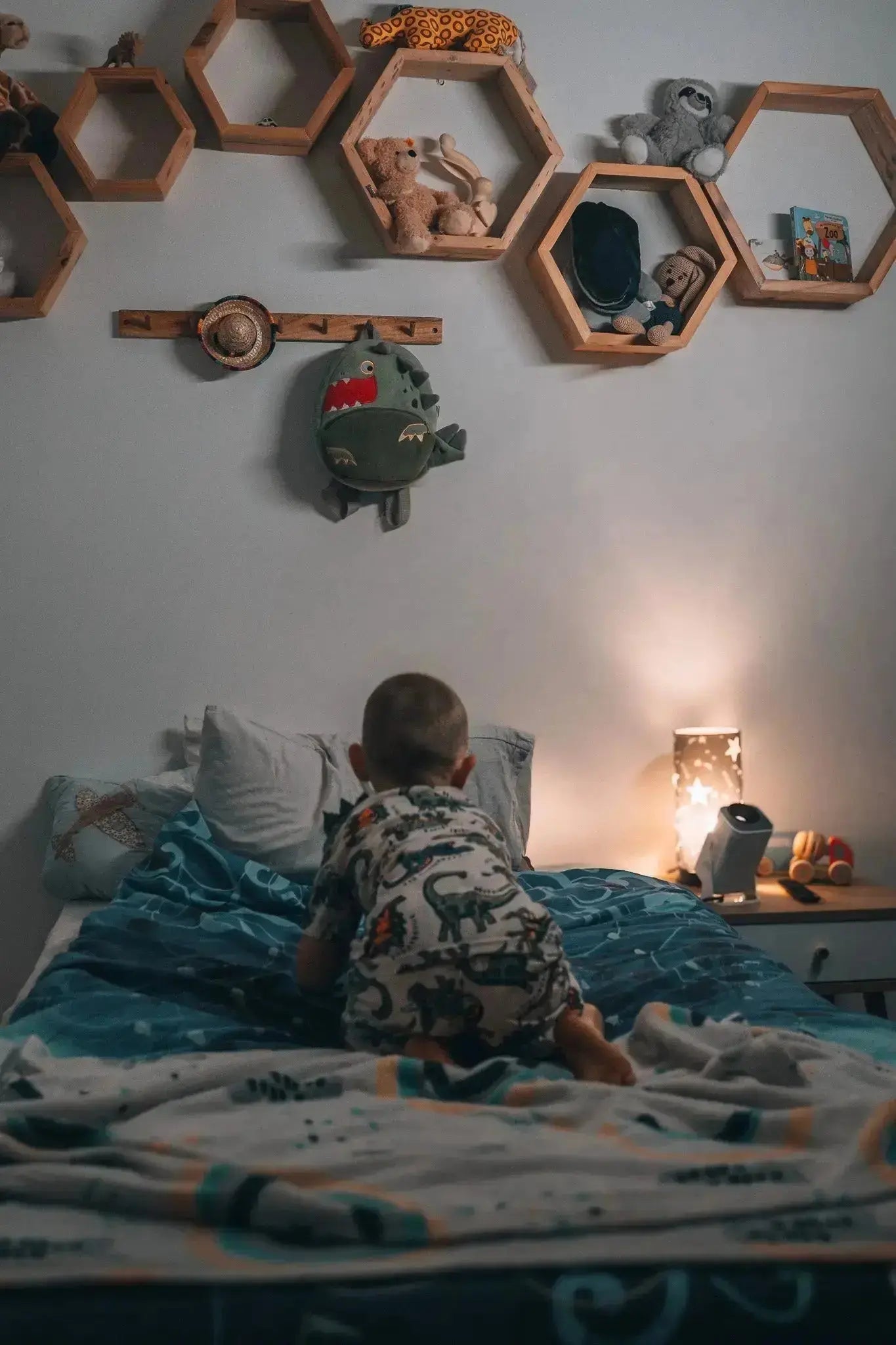
An autism bedtime routine can help evenings feel calmer, clearer, and easier to repeat. For many autistic children, bedtime is not just about being tired. It is also about transitions, sensory comfort, predictability, and feeling safe at the end of the day. When bedtime feels unclear or overstimulating, evenings can become much harder for both children and parents.
Quick Takeaway: An autism bedtime routine often works best when it is predictable, low-stimulation, and easy to repeat. The same order, fewer surprises, and a calmer environment can help bedtime feel more manageable over time.
Why bedtime can feel harder for autistic children
Bedtime includes a lot of transitions. A child may need to stop playing, move to the bathroom, change clothes, handle new textures, enter a quieter room, and separate from a parent. For some autistic children, that whole chain can feel like a lot to process at once.
Some children seem wide awake at bedtime. Others become upset, clingy, or resistant. Some need the exact same bedtime flow each night. Others find certain lights, sounds, smells, or fabrics especially hard to tolerate when they are already tired.

Why an autism bedtime routine can help
An autism bedtime routine can help reduce uncertainty. Instead of bedtime feeling different every night, the same steps happen in the same order. That familiarity can make evenings easier to understand and easier to move through.
A good bedtime routine does not need lots of steps. In many homes, a shorter routine works better. The goal is not to create a perfect evening. The goal is to create a bedtime rhythm your child can recognize and trust.
- Predictability: the same basic bedtime flow each night
- Low stimulation: quieter activities, softer light, and calmer transitions
- Sensory awareness: noticing what feels soothing and what feels uncomfortable
- Short transitions: fewer surprises and fewer last-minute changes
- Consistency: keeping the bedtime routine recognizable over time
What helps most in an autism bedtime routine
Before building the bedtime routine itself, it helps to focus on what usually supports calm and what tends to add friction.
Keep the routine predictable
Many autistic children may settle more easily when they know what comes next. The more familiar the bedtime sequence becomes, the less mental effort it may take to move through it.
Reduce stimulation late in the evening
A low-stimulation routine often works better than a busy one. Dimmer light, quieter activities, and fewer changes can help bedtime feel gentler.
Pay attention to sensory comfort
Pajamas, bedding, sounds, room temperature, and smells can all affect how bedtime feels. Small discomforts can become bigger at the end of the day.
Use calm, clear language
Short cues can work better than lots of talking. A simple phrase such as “wash, pajamas, story, bed” can help keep the bedtime flow clear.
End with the same final cue
A repeated goodnight phrase, cuddle, blanket routine, or song can help signal that bedtime is complete.
Low-stimulation bedtime ideas that can help
You do not need to use all of these ideas. Pick the ones that suit your child and build your autism bedtime routine around them.
1. Start with the same bedtime cue
This could be dimming the lights, going to the bathroom, or saying the same phrase every evening. A repeated starting cue helps bedtime feel familiar.
2. Use a bath or warm wash routine
A warm bath can be a useful bedtime anchor for some children. If that does not work every night, even a warm washcloth routine can create the same signal.
3. Keep pajamas simple and comfortable
Comfort matters. Familiar pajamas and bedding may reduce friction when textures are an important part of bedtime comfort.
4. Read one or two familiar books
Many children enjoy the same books night after night. That repetition is not a problem. Familiar stories can make the bedtime routine feel more settled.
5. Use one quiet song or sound cue
For some children, one gentle song at the same point each night can help mark the final stage of the evening.
6. Build in quiet comfort
Some children settle best with closeness and very little talking. Calm presence can sometimes help more than extra conversation at bedtime.
7. Add one gentle bedtime learning moment
Some families like including a calm educational activity before sleep. That can work well if it stays predictable and low-stimulation rather than bright, noisy, or overexciting.

A simple autism bedtime routine to try
If you want a practical starting point, here is one example of an autism bedtime routine.
- 5 minutes: move to the bathroom or bedroom and begin the bedtime cue
- 5 minutes: wash, brush teeth, pajamas
- 5 minutes: quiet comfort, cuddle, or calm sensory settling time
- 5 to 10 minutes: one predictable book or one calm bedtime activity
- 2 to 5 minutes: tuck-in, same goodnight phrase, lights low
This kind of autism bedtime routine can work well because it is clear and repeatable. It gives your child a bedtime pattern they can learn and expect.
What sensory factors should parents think about?
Sensory comfort can shape the whole bedtime experience. You do not need to create a perfect bedroom. It simply helps to notice the small things that regularly make bedtime easier or harder.
- lighting that feels too bright
- noise from other rooms
- itchy pajamas or bedding textures
- room temperature that feels uncomfortable
- strong smells from soap, lotion, or detergent
- activities that leave your child more wound up than calm
A bedtime routine often becomes easier when sensory discomfort is reduced instead of overlooked.
What if your child resists bedtime?
Bedtime resistance does not always mean a child is refusing sleep itself. Sometimes they are resisting a transition, a discomfort, or a bedtime step that feels unpredictable.
When bedtime feels difficult, it often helps to:
- look for one part of the bedtime routine that may be causing friction
- reduce the number of steps if the routine feels too long
- keep your language calm and consistent
- avoid changing everything at once
- repeat what works before trying something completely new
Consistency often matters more than intensity. A predictable autism bedtime routine repeated over time may help more than a routine that changes every few nights.

Mistakes that make an autism bedtime routine harder than it needs to be
Too many bedtime steps
A long bedtime routine can become tiring and unpredictable. Simpler is often better.
Late-evening stimulation
Busy play, loud sounds, or fast activity changes can make it harder to settle into a calmer bedtime state.
Changing the routine too often
If the bedtime routine is working reasonably well, keep the shape of it stable. Constant changes can make bedtime feel less secure.
Expecting instant results
Some changes may help quickly. Others take time. A calmer bedtime often builds through repetition and familiarity.
When a gentle bedtime tool can fit naturally
Some families want bedtime to include one small, positive learning moment. That can work well when it stays calm and fits the tone of bedtime.
For parents looking for a calm, low-stimulation option, the Ozmotic Learning projection-based learning tool can fit naturally into an autism bedtime routine as one gentle step before sleep.
If you want a broader bedtime foundation first, it may help to read Bedtime Routines for Kids: Better Sleep, Learning, and Behavior, Bedtime Resistance in Children: How Routines Reduce Stress and Struggles, and Blue Light and Bedtime.
Parents who want extra reassurance before exploring the product can also visit the reviews page.
Final thoughts
The best autism bedtime routine is not the most elaborate one. It is the one your child can understand, expect, and move through with less stress. Predictable steps, lower stimulation, and better sensory comfort can make evenings feel more manageable over time.
If bedtime feels hard right now, start small. Keep the routine simple. Repeat what helps. That is often how a calmer bedtime routine begins.
Share:
Preschool Bedtime Routine: A Simple, Calm Evening Plan
Phonics Games for Preschoolers at Home: Easy 10-Minute Ideas