
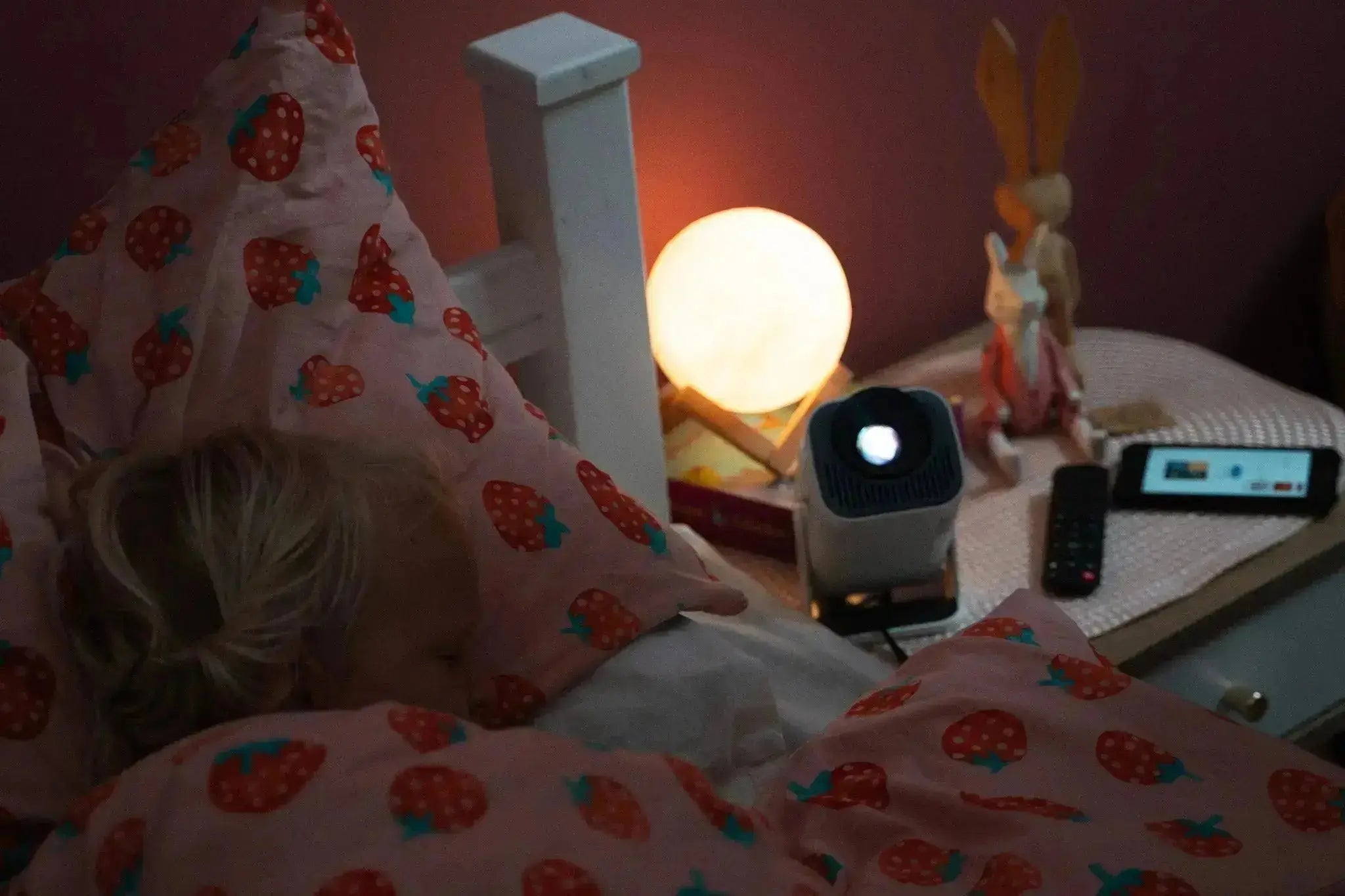
Bedtime routines for kids do more than help children prepare for sleep. A predictable bedtime routine can support calmer evenings, language-rich moments, emotional security, and more consistent family rhythms. That is why bedtime routines for kids can matter so much for family life. When the same calming steps happen in the same order each night, children know what to expect, and that sense of predictability can make sleep, learning, and behavior easier to support over time.

Key takeaway: Bedtime routines for kids create a calm, predictable pattern that can support sleep habits, emotional security, and gentle bedtime learning for kids.
Bedtime routines for kids
For parents, this is helpful news because it means progress does not always come from doing more. Often, it comes from doing the same small things consistently. A calm bedtime routine for kids can become one of the most reliable ways to reduce friction at night while also supporting a warmer, more predictable evening rhythm.
What the research says about bedtime routines for kids
Research on bedtime routines for kids is unusually practical because it connects directly to daily family life. Mindell and Williamson reviewed evidence showing that bedtime routine benefits for children may go beyond sleep alone. Consistent bedtime routines were linked with sleep quality, parent-child interaction, and broader development. You can read the paper here: Benefits of a bedtime routine in young children: Sleep, development, and beyond.
Hale and colleagues add another important point. Their work on language-based bedtime routines found that routines involving reading and storytelling were associated with sleep duration and verbal and cognitive outcomes. That makes bedtime routines for kids useful because they can support both rest and learning moments. More recently, Pudasainee-Kapri and colleagues found that early bedtime routines were linked with emotional regulation in children, which can influence behavioral outcomes over time.
Taken together, the message is clear: bedtime routines for kids can help because they create a repeated pattern of calm, connection, and predictability. That pattern can support the body, the brain, and the parent-child relationship.
Why consistency matters so much at bedtime
A consistent bedtime routine works because children respond well to predictability. When the order of the evening stays stable, the brain and body begin to recognize the signals that sleep is coming. That can lower stress, reduce resistance, and make transitions easier. In many homes, the biggest benefit of bedtime routines for kids is not one single step. It is the repeated rhythm of the whole sequence.
Consistency can build emotional safety. A child who knows what comes next often feels more secure than a child facing a different bedtime pattern every night. That security matters for sleep, but it also matters for behavior. Emotional regulation in children can feel easier to support when routines reduce uncertainty and overstimulation.

| Routine element | How it helps | Development support | Example |
|---|---|---|---|
| Predictable order | Reduces uncertainty at bedtime | Supports emotional regulation in children | Bath, pajamas, story, lights out |
| Calm interaction | Lowers stimulation before sleep | Supports calmer sleep habits | Quiet voice, dim lights, cuddles |
| Language-rich activity | Adds words, stories, and repetition | Supports sleep and child development routines | Reading aloud or bedtime review |
| Nightly repetition | Makes the routine easier to sustain | Builds bedtime habits for toddlers and older kids | Same short sequence each evening |
How bedtime routines support sleep and child development
Bedtime routines for kids matter because sleep and development are closely connected. Children who sleep well often cope better during the day, manage emotions more easily, and have more capacity for learning. A healthy bedtime routine for kids can help create the conditions for rest by lowering the chaos that can build up before bed.
This is one reason routines feel so useful in practice. They do not only help children settle. They also help parents create a stable environment where learning and connection can happen naturally. That is why bedtime routines for kids fit so well with bedtime learning for kids and with the logic behind early childhood neuroplasticity. When the environment is calm and repeated, children may have more space to absorb and revisit foundational material.
Parents often think of bedtime as a management problem. But bedtime routines for kids can also be viewed as a practical support for family rhythm and early learning. The routine creates a repeatable daily window that can support sleep and child development at the same time.
Why language-based bedtime routines are especially useful
One of the strongest ideas in the research is that language-based bedtime routines can provide extra value. Reading, storytelling, and calm review of words or concepts help children hear language in a low-pressure setting. That matters for vocabulary, listening, memory, and later learning habits.
A bedtime routine for learning does not need to be formal. Reading one book, repeating a few words, reviewing phonics sounds, or talking through a simple category can all fit inside bedtime routines for kids. These quiet moments work especially well when they happen consistently. That is also why posts like calm learning through visual and audio cues and spaced repetition for kids fit naturally into the same content cluster.
- Stories build language: children hear rhythm, vocabulary, and sentence structure.
- Repetition builds familiarity: hearing the same ideas across nights can strengthen recognition.
- Calm delivery lowers pressure: bedtime habits for toddlers and young children work best when they feel safe.
- Routine supports consistency: the same time and pattern helps bedtime routines for kids stick.
Where Ozmotic Learning fits into bedtime routines for kids
Ozmotic Learning was designed to fit into the final, calming part of the evening. That makes it a natural match for bedtime routines for kids because it does not try to replace the routine. It supports it. Instead of adding more chaos, it can support a short bedtime routine for learning within a predictable flow that children can come to expect each night.

The Ozmotic Learning projection-based learning tool helps families add gentle learning through wall or ceiling projection to a calm bedtime routine for kids. The Content library makes it easier to choose repeatable categories and lessons, while Learn the Science explains why routine, repetition, and timing matter so much for young children.
For families already using bedtime stories, cuddles, and quiet wind-down time, bedtime routines for kids can include a few minutes of review without making the evening feel heavy. That is where routine becomes useful: it turns a good intention into a repeatable habit.
A simple bedtime routine parents can try
A healthy bedtime routine for kids does not need to be long. It needs to be calm, repeatable, and clear. Here is one simple version:
- Start with a predictable cue: dim lights or begin bath time at roughly the same time.
- Move into comfort steps: pajamas, cuddles, and quiet connection.
- Add one language-rich moment: story time, bedtime review, or a short learning segment.
- Keep stimulation low: soft voices, fewer transitions, and no rushing.
- End the same way each night: this helps the predictable bedtime routine become automatic.
This kind of bedtime routine for learning works well because it supports both structure and warmth. It gives children a calm sequence they can trust, while also making space for learning and connection.
Why bedtime routines for kids are worth protecting
Bedtime routines for kids are one of the small family habits that can support sleep, learning, and behavior together. They help children settle, they strengthen the emotional tone of the evening, and they create a natural place for small but meaningful learning moments. Over time, those small moments can add up.

That is why bedtime routines for kids deserve attention. They are not just a parenting trick. They can be a steady foundation for calmer evenings, sleep support, emotional regulation in children, and more consistent bedtime learning for kids. When the evening becomes predictable, calm, and connected, the benefits can reach beyond bedtime itself.
Share:
Bedtime Learning for Kids: Why Sleep Helps New Learning Stick
Learning Repetition for Kids: Why Spaced Practice Builds Stronger Memory