
A screen free bedtime routine can help evenings feel calmer, simpler, and easier to repeat. For many families, bedtime is the hardest part of the day. Everyone is tired, routines slip, and screens can become the easiest option. But a calmer evening does not need to be complicated.
Quick Takeaway: A screen free bedtime routine works best when it is short, predictable, and low-stimulation. A few repeatable steps usually work better than a long bedtime plan packed with too many activities.
Why parents look for a screen free bedtime routine
Most parents are not looking for a perfect evening. They are looking for a bedtime routine that feels calmer and easier to manage. A screen free bedtime routine can help create a clearer shift from daytime energy to nighttime rest.
The goal is not to remove screens just to follow a rule. The real goal is to replace them with a bedtime flow that feels steadier, softer, and more predictable for toddlers, preschoolers, and early learners.

What makes a bedtime routine actually calming?
A good bedtime routine is usually less about doing more and more about doing the same few things in the same order. Children often settle better when bedtime feels familiar.
- Predictability: the routine follows the same shape each night
- Low stimulation: the activities feel quiet and gentle
- Short transitions: fewer last-minute switches make the evening smoother
- Connection: even a few calm minutes with a parent can help
- Consistency: the pattern stays recognizable from night to night
If bedtime often feels rushed, aim for a consistent bedtime routine rather than a perfect one. A short routine you can actually repeat will usually help more than a long one that only works now and then.
10 screen free bedtime routine ideas for toddlers and preschoolers
You do not need to use all of these ideas. Pick a few that suit your family and build your own screen free bedtime routine around them.
1. Start with a simple tidy-up cue
A small reset can help children understand that the day is winding down. This could be putting one or two toys away, placing books in a basket, or carrying pajamas to the bedroom. Keep it quick and light.
2. Use bath time or a warm wash routine
Bath time can be a helpful anchor in a calming bedtime routine. If a full bath is not realistic every night, even washing hands, face, and feet with a warm cloth can create the same bedtime cue.
3. Keep pajamas and brushing teeth predictable
These practical steps are part of the routine too. When they happen in the same order each night, they often feel more comforting and less disruptive.
4. Add a short cuddle-and-chat moment
Some children settle better when they have a small window to reconnect. This could be two quiet minutes on the bed, one simple question about the day, or a calm cuddle before the next step.
5. Read one or two books
Reading is one of the easiest screen free bedtime routine ideas because it is quiet, repeatable, and easy to adapt for young children. Toddlers may want the same book every night. Preschoolers may enjoy choosing between two options.
6. Try simple storytelling from memory
If you are too tired to read, tell a short story instead. Many children love hearing the same gentle bedtime story pattern again and again.
7. Use a lullaby or one quiet song
One song at the same point each night can become part of the bedtime ritual. Keep it soft, slow, and familiar.
8. Add a comfort object or tuck-in ritual
A stuffed toy, blanket, or simple tuck-in game can help bedtime feel secure. Small rituals often make a screen free bedtime routine feel more settled.
9. Try a calm learning moment
Not every screen free bedtime routine activity has to be passive. Some families like including a gentle educational moment, as long as it stays calm and low-stimulation.
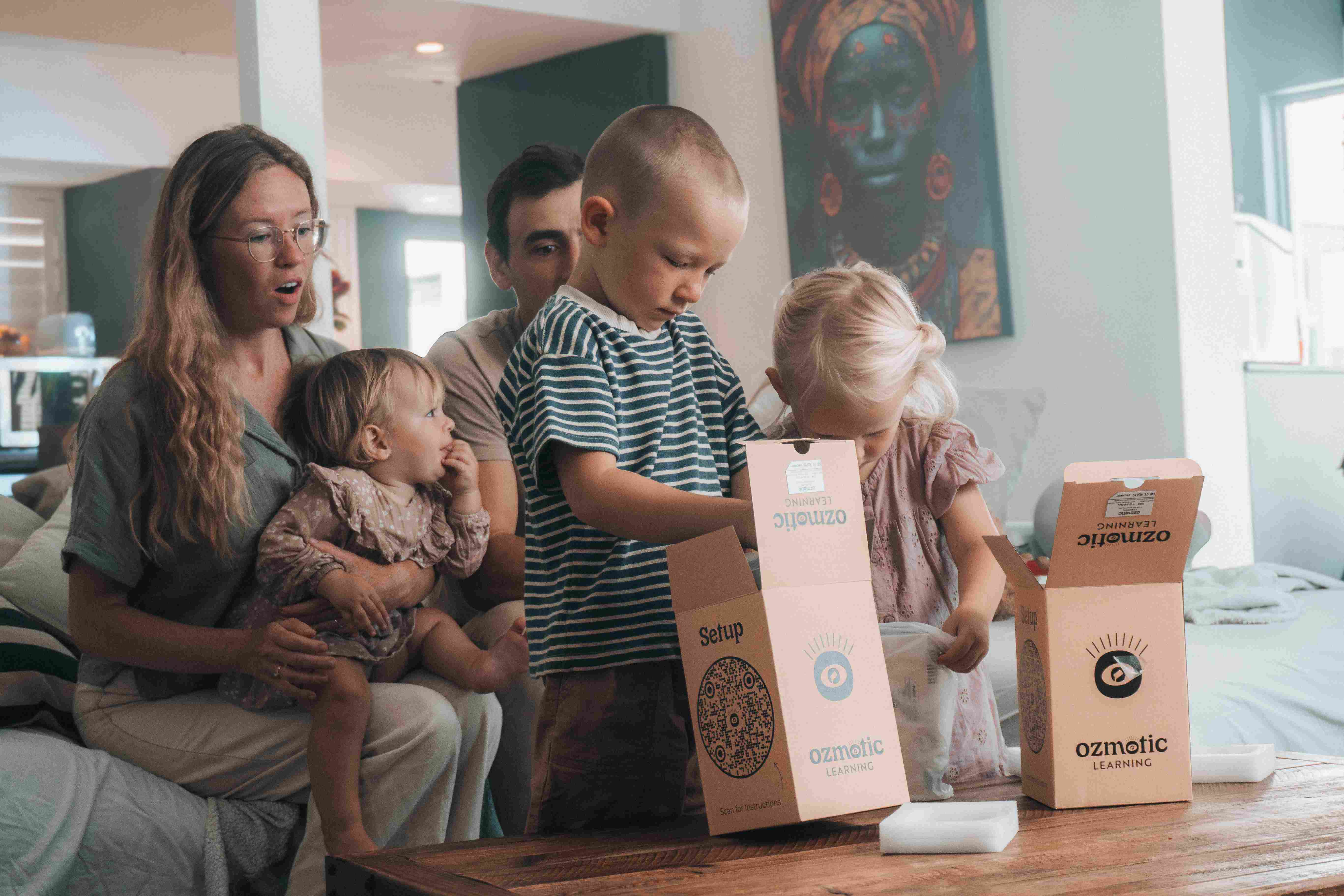
For families who want a softer alternative to regular evening screen use, Ozmotic Learning can fit naturally into the bedtime routine as a quiet, projection-based learning moment.
10. End with the same final goodnight sequence
The last step matters. That might be a final cuddle, dim lights, one familiar phrase, and then leaving the room. A repeatable ending helps children recognize that bedtime has arrived.

A sample 20 to 30 minute screen free bedtime routine
If you want a simple structure to start with, here is one example.
- 5 minutes: tidy one or two items and head to the bathroom
- 5 minutes: wash, brush teeth, pajamas
- 5 minutes: quiet cuddle or gentle chat
- 5 to 10 minutes: read a book or use a calm bedtime-friendly learning activity
- 2 to 5 minutes: song, tuck-in routine, lights low, goodnight
This kind of screen free bedtime routine works because it is clear. It does not ask too much of tired children or tired parents. It simply creates a dependable pattern.
Toddler vs preschooler bedtime adjustments
| Age group | What often helps most | What to watch for |
|---|---|---|
| Toddlers | Short steps, fewer choices, repeated phrases, familiar books | Too many transitions, too many options, routines that run too long |
| Preschoolers | Simple responsibility, choice between two books, predictable sequence | Negotiating for one more thing, stimulating play too close to bed |
A toddler bedtime routine usually works best when it is very simple. A preschool bedtime routine can include a little more participation, but it should still feel calm and structured.
What if your child is used to screens before bed?
If screens have been part of your evening for a while, you do not need to change everything overnight. A gradual shift often works better than a sudden all-or-nothing change.
- replace just one part of the evening first
- keep the replacement simple, like books or quiet music
- use the same order each night
- avoid presenting the change as a punishment
- stay calm when there is pushback
Consistency usually matters more than intensity. A calm screen free bedtime routine repeated over time is often easier to maintain than a strict routine that is hard to keep.

Mistakes that make a screen free bedtime routine harder than it needs to be
Making the routine too long
A good bedtime routine does not need lots of steps. Too much can make bedtime feel drawn out and tiring.
Adding exciting activities too late
Even fun ideas can backfire if they ramp children up instead of helping them wind down.
Changing everything at once
If bedtime has been chaotic, it is tempting to overhaul the whole evening. Small, consistent changes are usually easier to keep.
Expecting instant results
Some children settle into a new routine quickly. Others need more time. Progress still counts, even when the first few nights feel messy.
When a gentle bedtime tool can fit naturally
Some families want bedtime to include more than just getting ready for sleep. They want a small, positive learning moment too. That can work well, as long as the activity stays soft, simple, and suited to bedtime.
For families looking for one calm learning option that does not rely on regular evening screen use, the Ozmotic Learning projection-based learning tool can fit naturally into a screen free bedtime routine as a gentle wind-down activity.
If you want to build the full flow around that idea, it may also help to read Bedtime Routine for Kids: A Science-Backed Plan That Works, Educational Bedtime Routine for Toddlers, and Bedtime Routines for Kids: Better Sleep, Learning, and Behavior.
Final thoughts
The best screen free bedtime routine is not the fanciest one. It is the one your family can repeat. A warm wash, pajamas, a story, a cuddle, and a familiar goodnight phrase can go a long way.
If your evenings feel messy right now, start small. Pick one screen free swap. Keep it simple. Repeat it tomorrow. That is often how a good bedtime routine begins.
Share:
ADHD Bedtime Routine for Kids: Calm Steps for Easier Evenings
Autism Bedtime Routine: Predictable Low-Stimulation Ideas That Help