
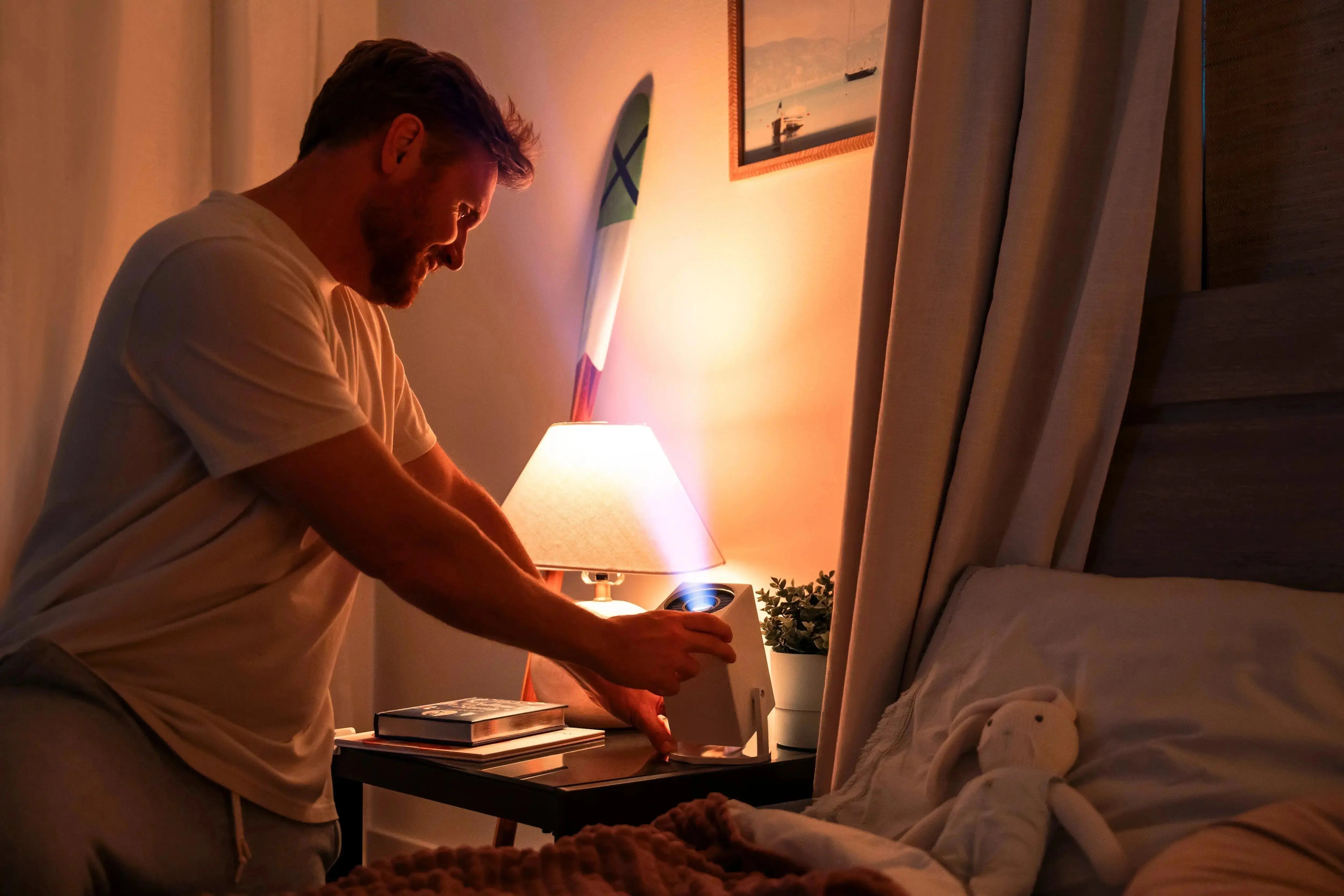
Blue light bedtime projector
If you are a parent, you have probably heard warnings about screen time and blue light, especially before bed. This guide explains what to look for in a blue light bedtime projector, and how Ozmotic Learning is designed to support calmer evenings.
- Choose warm, low-intensity light (not a bright screen).
- Use indirect projection on a wall or ceiling, not a device held close to the eyes.
- Set an auto-off timer so the room naturally returns to darkness.
- Keep content familiar and soothing, so bedtime feels predictable.
- Pair it with a simple routine (bath, pajamas, story, then lights down).
Key takeaway: Not all light is the same. A blue light bedtime projector should feel soft, indirect, and intentionally built for evening wind-down.

What blue light is, and why parents worry about it
Blue light is a natural part of the visible light spectrum, it is one reason the sky looks blue during the day. The concern is not daylight itself, it is heavy exposure to artificial blue light from phones, tablets, and TVs at night. Research links evening blue light exposure to changes in the body’s sleep signals, including melatonin, which helps cue the brain that it is time to rest.
For a high-level overview of how blue light can affect sleep, see this resource from Harvard Medical School, which summarizes the relationship between light, melatonin, and circadian rhythms: Harvard Health on blue light and sleep.
Why Ozmotic is different from a screen
It is understandable to hesitate about any bedtime device that emits light. The difference is that Ozmotic is not a phone or tablet, and it is not designed to keep a child in “daytime mode.” A blue light bedtime projector should be a softer alternative to screens, with warm tones, muted visuals, and indirect projection that supports relaxation.
If you want to see the device parents are using at home, start with the product page for the Ozmotic Learning Projector. For the learning and development background, you can also explore learn the science behind the approach.

Built-in choices that support calmer nights
Our goal has never been to add another bright screen to your child’s bedtime. We designed Ozmotic Learning to be a calmer, lower-stimulation option that still supports repetition, connection, and learning. In practice, that means intentional choices like warm, low-intensity light and an auto-off timer, so the routine ends naturally without an extra “one more video” moment.
- Limited blue light approach: prioritizes warmer tones and softer visuals.
- Indirect projection: content appears on a wall or ceiling, not a handheld screen.
- Muted colors: designed to reduce overstimulation in the evening.
- Auto-off timer: supports a consistent finish to the bedtime routine.
Screen vs projector, a simple comparison
Parents often ask if a blue light bedtime projector is “just another screen.” Here is a practical way to think about the difference.
| Feature | Phone/Tablet Screen | Blue light bedtime projector style |
|---|---|---|
| Brightness and intensity | Often bright and high-contrast | Designed for warm, low-intensity projection |
| Viewing distance | Close to the face | Projected onto a wall or ceiling |
| Stimulation level | Fast-changing content, alerts, and interaction | Familiar, calmer content for wind-down |
| Routine support | Easy to extend and scroll | Auto-off timer helps end the routine |
Our promise to parents
We understand how essential healthy sleep is for children, and we would never design a product that compromises that. Every element of Ozmotic Learning was created with children’s well-being at heart, and with parents’ confidence at the forefront. Our mission is to help families build bedtime routines that nurture curiosity, encourage learning, and support real rest.

Practical bedtime routine tips that pair well with Ozmotic
If you are introducing a blue light bedtime projector into your routine, consistency matters more than perfection. Keep the routine simple, repeatable, and calming.
- Start 30 to 45 minutes before bedtime with lower lights and quieter play.
- Use the same short content sequence each night for predictability.
- Let the timer end the session, so the room returns to dark naturally.
- Keep phones and tablets out of the bedroom if possible.
If you want more ideas you can rotate through, visit our content page. If you have questions about your child’s routine or setup, reach out via our contact page and we will help you make it work for your home.
Share:
Bedtime Learning for Kids: Turn Nightly Battles into Bonding