
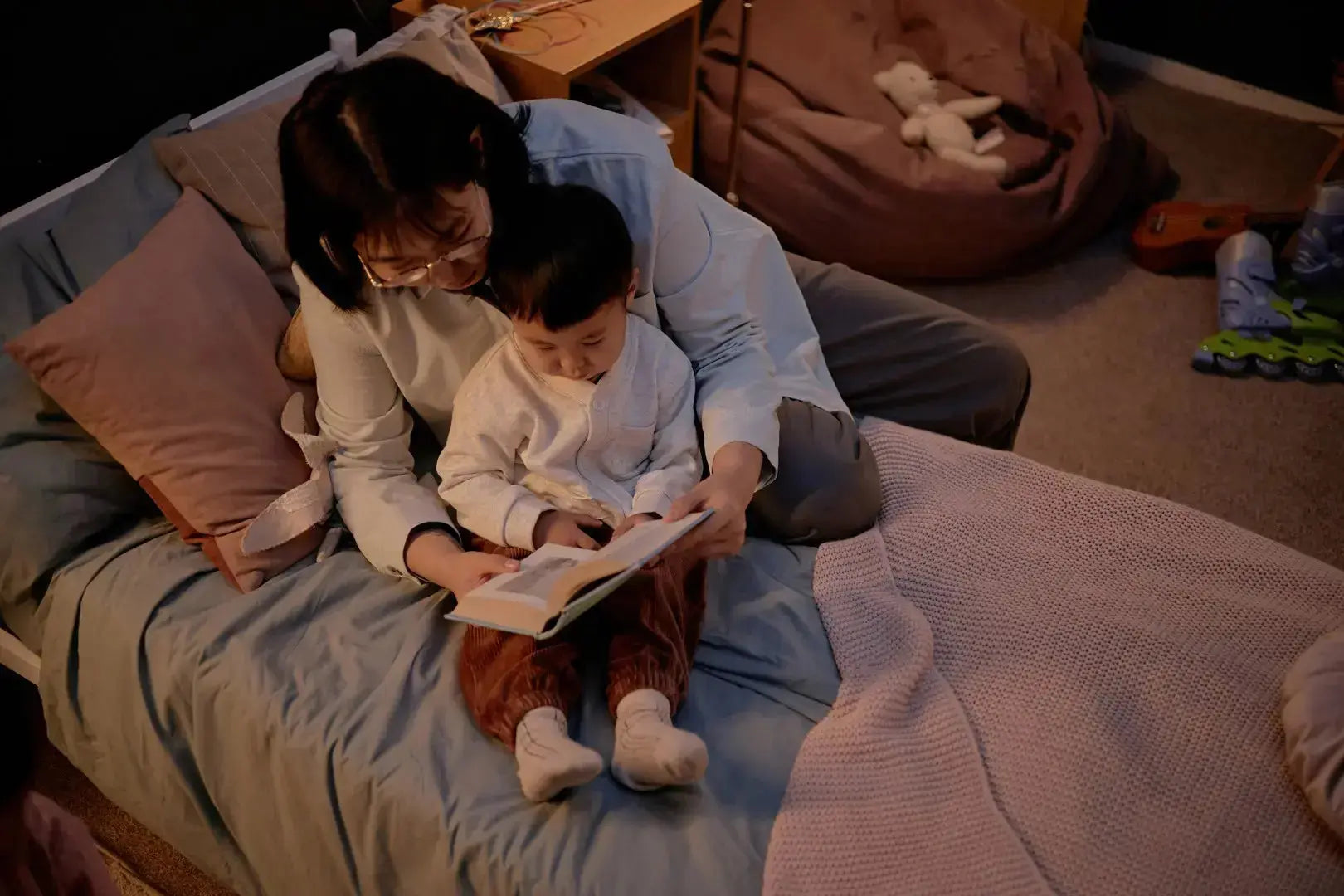
Bedtime can feel harder when a child is tired, sensitive to noise or light, or easily overstimulated after a busy day. For some families, including families with neurodivergent children, the most helpful bedtime routine is not bigger or more complicated. It is calmer, more predictable, and easier to repeat.
This guide shares sensory-friendly bedtime ideas parents can try at home to make evenings feel softer and more manageable. These ideas are not medical advice, and they are not meant to treat or diagnose any condition. They are simple, low-stimulation steps that can support sensory needs and help create a calmer bedtime environment for young children.
Sensory-Friendly Bedtime Ideas
- Lower stimulation before bedtime by reducing bright lights, loud sounds, and fast-paced activities.
- Use the same predictable bedtime routine each night so your child knows what comes next.
- Offer calming sensory choices like soft pajamas, quiet music, a favorite blanket, or gentle bedtime stories.
- Match the routine to your child’s sensory threshold instead of trying to follow a perfect formula.
- Keep learning moments short and calm so bedtime feels reassuring, not pressured.

What Does Sensory-Friendly Bedtime Mean?
A sensory-friendly bedtime routine is an evening routine that reduces unnecessary stimulation and supports a child’s need for calm, comfort, and predictability. It helps parents think about what their child sees, hears, feels, and does before sleep.
For some children, bedtime is difficult because the day has already been full of sensory input. Bright rooms, busy play, background noise, clothing textures, hunger, screens, daycare, errands, or social interaction can all build up. By evening, a child’s body may be tired, but their mind may still feel busy.
A sensory-friendly routine gently lowers the intensity of the environment. It may include softer light, quieter sounds, comfortable pajamas, fewer choices, and a repeatable pattern that helps the child understand what is happening next.
This can be especially helpful for sensitive children and neurodivergent children who may respond strongly to changes, noise, texture, transitions, or overstimulating evening activities. The goal is not to force sleep. The goal is to create a calmer path toward rest.
How Sensory Needs Can Affect Bedtime
Every child has sensory needs, but those needs do not look the same in every home. One child may need quiet and dim rooms. Another may need movement before settling. Another may struggle with pajamas, bedding, toothbrushes, or sudden changes in the evening.
Sensory processing is the way the body receives and responds to information from the world. When a child has had too much stimulation, bedtime can feel like one more demand. When a child has not had enough helpful movement or body feedback, they may still feel restless even when they are tired.
This is where a child’s sensory threshold matters. A child with a lower sensory threshold may become overwhelmed quickly by noise, textures, or bright rooms. A child with a higher sensory threshold may need more body-based calming before they can settle.
Parents do not need to label everything perfectly. It is enough to notice patterns. If bedtime battles often happen after loud play, late screen time, scratchy pajamas, or rushed transitions, your child may be showing you that the evening routine needs less stimulation and more predictability.
The practical goal is simple: meet sensory needs before the bedtime routine becomes a struggle.
1. Start With Sensory Input That Calms, Not Wakes Up
A calm bedtime often starts before the actual bedtime routine begins. If the hour before bed is loud, rushed, or full of screens, it can be harder for a child to shift into rest.
Try creating a short wind-down window before pajamas, brushing teeth, and stories. This does not need to be perfect. Even 20 to 30 minutes of lower stimulation can help the evening feel less abrupt.
Low-stimulation wind-down ideas
- Turn down bright overhead lights.
- Lower the volume of household noise or background media.
- Move from active play to quieter play.
- Choose simple toys instead of loud or flashing toys.
- Use a calm voice and fewer instructions.
- Give a simple warning before transitions, such as “In five minutes, we will start bedtime.”
The key is consistency. A child does not need a perfect evening. They need a familiar pattern that gently tells their body and mind, “We are moving toward rest now.”

2. Make the Bedtime Routine Predictable
Predictability can be very comforting at bedtime. When children know what comes next, they may need fewer reminders and feel less surprised by transitions.
A sensory-friendly bedtime routine works best when it is simple enough to repeat most nights. Too many steps can become overwhelming for both the parent and the child.
Example sensory-friendly bedtime routine
- Dim the lights.
- Put on comfortable pajamas.
- Brush teeth and use the bathroom.
- Choose one quiet bedtime activity.
- Read, listen, or look at something calm and familiar.
- Say the same goodnight phrase.
- Lights low or lights out.
You can also use a visual schedule if your child responds well to pictures. Keep it simple. For example: pajamas, teeth, story, cuddle, sleep.
For more general bedtime structure, you can also read Bedtime Routine for Kids: A Science-Backed Plan That Works.
3. Use a Visual Schedule to Get Ready for Bed
A visual schedule can help a child get ready for bed because it shows the steps instead of relying only on verbal reminders. This can be especially helpful when a child is tired, distracted, or sensitive to repeated instructions.
The picture plan does not need to be fancy. It can be a few printed pictures, simple drawings, or a small chart on the wall. The aim is to make the bedtime routine feel visible and predictable.
Simple picture steps to include
- Pajamas
- Bathroom
- Brush teeth
- Story or quiet activity
- Cuddle
- Sleep
Point to the chart and use the same short phrases each night. This gives your child a clear path through the evening without adding more talking, bargaining, or correction.
4. Reduce Sensory Triggers in the Bedroom
The bedroom environment can make a big difference. Some children are sensitive to small details that adults may not notice, such as itchy pajamas, a buzzing light, a bright hallway, a ticking clock, or a blanket that feels too heavy or too light.
You do not need to redesign the whole room. Start with small changes and watch what seems to help your child settle more easily.
Sensory-friendly bedroom checklist
- Lighting: Use soft, warm, low lighting instead of bright overhead light.
- Sound: Reduce sudden noise where possible. Some children prefer quiet, while others like soft white noise or gentle music.
- Clothing: Choose pajamas without scratchy labels, tight seams, or uncomfortable fabric.
- Bedding: Offer a familiar blanket, soft sheet, or comfort item if your child enjoys it.
- Visual clutter: Keep the sleep area calm and simple, especially near the bed.
- Temperature: Check whether your child seems too hot or too cold before sleep.
One small change at a time is enough. If you change everything at once, it can be harder to know what actually helped.
5. Try Sensory Strategies Before the Final Bedtime Steps
Sensory strategies are small supports that help the body move from alert to settled. They work best when they are simple, familiar, and used before a child is already upset.
Some children calm with quiet. Some calm with rhythm. Some calm with body feedback. Some need a mix of all three. Watch your child’s response and keep the supports that make evenings softer.
Calming ideas to try
- Slow rocking in a chair.
- A short stretch on the floor.
- A gentle hand squeeze if your child likes it.
- Soft music or white noise.
- A familiar blanket or comfort item.
- A short tidy-up task before pajamas.
If a strategy makes your child more alert, save it for earlier in the day. The best bedtime supports help your child move toward a calm state.

6. Heavy Work, Deep Pressure, and Proprioceptive Input Before Bed
Some children settle better after body-based calming activities. These activities can give proprioceptive input, which is feedback from muscles and joints. It helps the body understand where it is in space and can feel organizing for some children.
Parents may hear this described as heavy work, muscle work, or calming movement. In a bedtime routine, the aim is not to tire a child out with wild play. The aim is to offer slow, steady body feedback before the final quiet steps.
Gentle heavy work ideas
- Carry a small basket of pajamas to the bedroom.
- Push a laundry basket with soft clothes inside.
- Do slow wall pushes for a few seconds.
- Help stack books beside the bed.
- Crawl slowly like a bear from the bathroom to the bedroom.
Keep heavy work short and calm. If it turns into jumping, chasing, or loud play, it may be too activating for bedtime.
Deep pressure options to consider
Some children like deep pressure, such as firm hugs, being tucked in snugly, or using a heavier blanket. Other children do not like this feeling at all. Follow your child’s cues and never force it.
Weighted blankets are sometimes used by families who are exploring sensory-friendly sleep supports. A weighted blanket should be chosen carefully for a child’s age, size, and safety needs. If you are unsure whether weighted blankets are appropriate for your child, ask a qualified professional for guidance.
7. Physical Activity for Sensory Seekers
Some children are sensory seekers. They seem to need more movement, pressure, climbing, pushing, pulling, or active play before their body feels ready to rest.
Physical activity can help, but timing matters. Fast running, rough play, or exciting games right before bed may make bedtime harder. For these children, the better option is usually planned movement earlier in the evening, followed by slower calming steps.
A simple sensory circuit before bedtime
A sensory circuit is a short sequence of movement activities. For bedtime, keep it gentle and predictable.
- Move: five slow animal walks or wall pushes.
- Organize: carry pajamas or place books on the shelf.
- Calm: sit for a story, song, or cuddle.
This kind of sensory circuit can help meet sensory needs without turning bedtime into a game. Keep it short, quiet, and repeatable.
Physical activity is most helpful when it supports the bedtime routine instead of taking over the evening. If your child becomes more excited, move the active part earlier and keep the final steps calm.
8. Calm, Familiar Bedtime Activities
Some bedtime activities are calming because they are familiar. A favorite story, quiet song, gentle projection-based visual, or repeated phrase can become a signal that the day is ending.
For sensitive children, novelty can sometimes feel exciting instead of soothing. That does not mean you can never introduce something new. It just means bedtime may not be the best time for big surprises.
Calm activity ideas before sleep
- Read the same short book for a few nights in a row.
- Listen to a gentle story or soft music.
- Use a quiet visual routine with low light.
- Do a short “three good things” recap from the day.
- Practice simple breathing, such as smelling a flower and blowing out a candle.
- Look at calm images, letters, or shapes without turning it into a lesson.
Deep breathing exercises can help some children slow down when they are ready for calm. Keep deep breathing exercises playful and brief, such as “smell the flower, blow the candle.” If it frustrates your child, skip it and try a story or cuddle instead.
Ozmotic Learning can fit naturally into this kind of bedtime routine because it is designed for calm, low-stimulation learning moments at home. If your child enjoys gentle visual learning before bed, you can explore the Ozmotic Learning projection-based learning tool as one possible part of a quiet evening rhythm.
The product should feel like a support, not a requirement. A sensory-friendly bedtime routine can also be built with books, songs, cuddles, soft bedding, or a simple picture routine.
9. Offer Limited Choices
Choices can help children feel involved, but too many choices at bedtime can become overwhelming. A sensory-friendly approach uses small, clear choices that keep the routine moving.
Instead of asking, “What do you want to do now?” try offering two calm options.
Simple bedtime choice examples
- “Do you want the blue pajamas or the striped pajamas?”
- “Do you want one story or one song?”
- “Do you want the small blanket or the soft blanket?”
- “Do you want to brush teeth before or after pajamas?”
- “Do you want the door open a little or closed?”
This gives your child some control without creating a long negotiation. It can also reduce bedtime resistance because your child is participating in the routine, not just being moved through it.
10. Prepare for Transitions Before They Happen
Many bedtime struggles happen during transitions. Moving from play to pajamas, from the bathroom to the bedroom, or from story time to lights out can feel sudden for a young child.
A predictable transition cue can make the shift easier.
Helpful transition cues
- Use a gentle countdown: “Two more minutes, then pajamas.”
- Use the same phrase each night: “First teeth, then story.”
- Point to the picture chart.
- Use a soft timer or quiet song as a signal.
- Keep your wording short and familiar.
If your child struggles with bedtime resistance, you may also find this helpful: Bedtime Resistance in Children: How Routines Reduce Stress and Struggles.
11. Keep Learning Gentle at Bedtime
Bedtime can be a lovely time for gentle learning, but it should not feel like a test. For preschoolers and young children, calm learning moments can be as simple as naming a letter, listening to a short story, counting stars, or repeating a familiar phrase.
The best bedtime learning is relaxed, short, and pressure-free.
Gentle bedtime learning ideas
- Name one letter on the page of a favorite book.
- Count three objects in the bedroom.
- Repeat a calming word or phrase.
- Talk about one picture in a story.
- Review one simple idea from the day.
Stop while it still feels easy. If your child is getting restless, silly, upset, or more alert, it may be time to simplify the bedtime routine rather than add more.
12. Adjust the Routine for Neurodivergent Children Without Overcomplicating It
Neurodivergent children may benefit from extra predictability, lower stimulation, and more time for transitions. That does not mean every routine needs to be complicated or highly structured.
Often, the most helpful bedtime routine is one the family can actually repeat.
For a child who likes sameness, you might keep the same order every night. For a child who needs movement, you might include one calm body activity before pajamas. For a child who is sensitive to texture, you might focus first on comfortable clothing and bedding.
Parent-friendly ways to adapt
- If your child dislikes sudden changes, keep the bedtime order the same.
- If your child seeks movement, try slow stretching, gentle rocking, or a short tidy-up task.
- If your child is sensitive to sound, reduce background noise before the routine starts.
- If your child gets overwhelmed by choices, offer only two options.
- If your child needs reassurance, use the same goodnight phrase every night.
For more specific bedtime support, you can also read ADHD Bedtime Routine for Kids: Calm Steps for Easier Evenings and Autism Bedtime Routine: Predictable Low-Stimulation Ideas That Help.

A Simple Sensory-Friendly Bedtime Plan to Try Tonight
Here is a short version you can try without buying anything new or changing the whole evening.
Try this tonight
- 30 minutes before bed: Dim the lights and reduce noise.
- 20 minutes before bed: Move to pajamas, teeth, and bathroom.
- 10 minutes before bed: Choose one calm activity, such as a story, soft song, or gentle visual learning moment.
- 5 minutes before bed: Use the same goodnight phrase and keep the room calm.
- After lights out: Keep responses quiet, simple, and predictable.
You can adjust the timing based on your child’s age, energy level, sensory needs, and family schedule. The exact minutes matter less than the rhythm.
Final Thoughts: Calm Is the Goal, Not Perfection
A sensory-friendly bedtime routine does not need to look perfect. It only needs to help your child move from busy to calm in a way that feels safe, familiar, and repeatable.
Start with one or two changes: dimmer lights, fewer choices, softer sounds, or a predictable order. Once those feel natural, you can add gentle learning, a bedtime story, or a calm visual routine if it suits your child.
For families looking for a low-stimulation way to include gentle learning at bedtime, Ozmotic Learning can be explored as a soft next step. Keep the routine simple, follow your child’s cues, and build from what already helps your evenings feel calmer.
Small, repeatable steps can help bedtime feel less rushed and more reassuring for everyone.
Share:
Phonics Games for Preschoolers at Home: Easy 10-Minute Ideas
Letter Sounds Games at Home for Preschoolers