
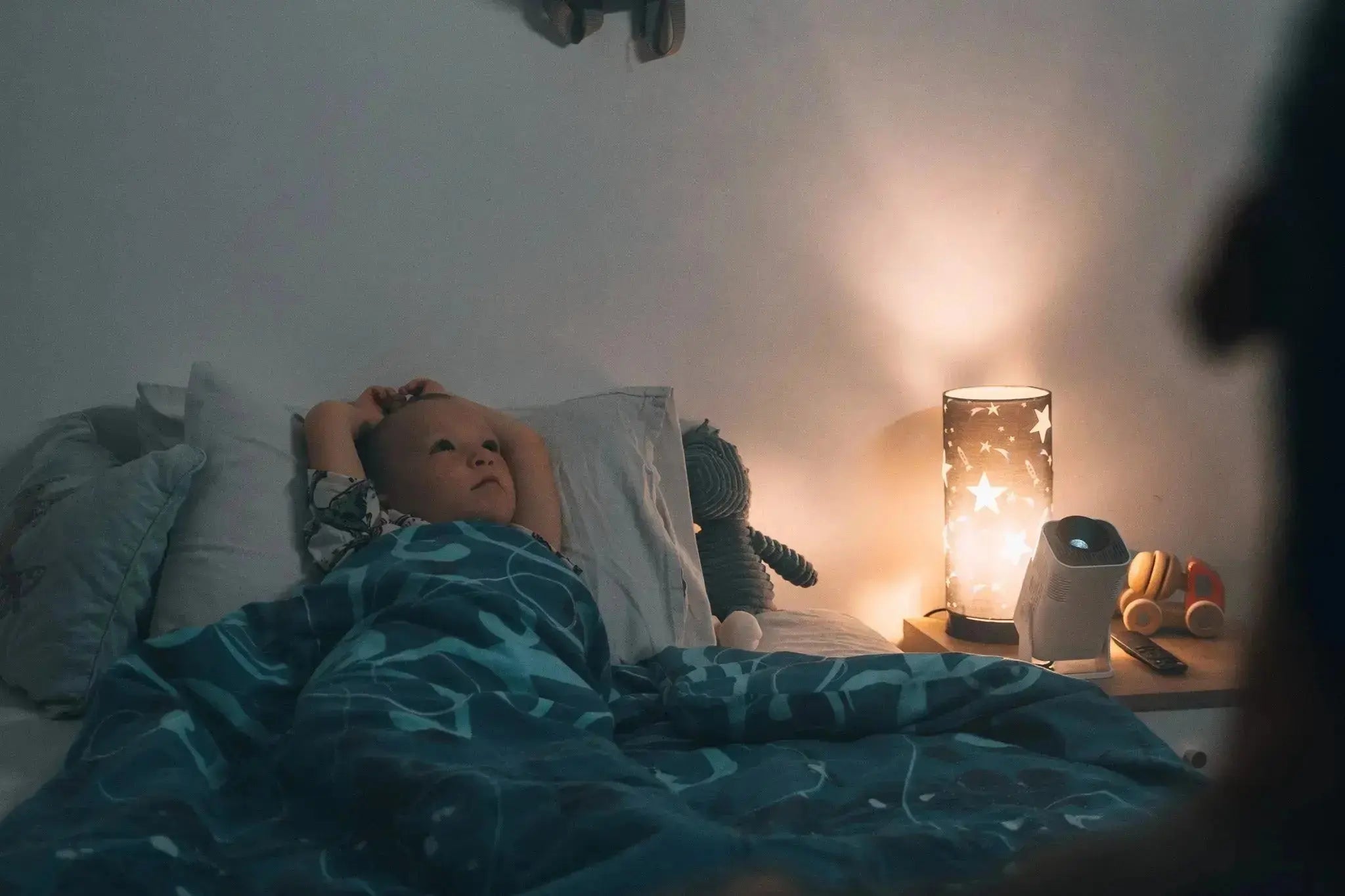
Sleep and child development are closely connected during the school-aged years, when attention, learning, friendships, and emotional regulation are all growing. If your child is more irritable, more distracted, or struggling to settle at night, sleep quality and sleep consistency may be worth reviewing. A calmer bedtime routine can help families create a more predictable evening rhythm.
Sleep and child development
- Protect the hour before bed: keep it dim, quiet, and predictable.
- Prioritize consistency: aim for a similar bedtime and wake time most days.
- Watch screen habits: evening devices can make it harder for some children to wind down.
- Keep wind-down simple: choose one calming activity, then move toward lights out.
- Notice daytime signals: mood swings, distraction, or hyperactivity can sometimes be linked with poor sleep.
Key takeaway: Sleep and child development are linked across cognition, emotions, and behavior, and bedtime habits are a practical place for families to start.

What the 2024 systematic review found
The systematic review “Sleep as a Developmental Process: A Systematic Review of Cognitive, Emotional, and Behavioral Outcomes in Children Aged 6–12 Years” synthesized recent cross-sectional and cohort research from 2019 to 2024 on how sleep relates to development in middle childhood. Across the included studies, better sleep duration and quality were associated with cognitive outcomes such as attention and memory, emotional regulation, and fewer behavioral concerns in some children. You can read the review here: Sleep as a Developmental Process.
One theme in the review is that sleep can be a “modifiable factor.” That matters for parents because it means small habit shifts may support healthier routines, even when school and family pressures are not changing overnight.
Why sleep matters during the school-aged years
Middle childhood is often when children are expected to sit longer, focus more, and manage emotions in social settings. Sleep and child development connect here because sleep is linked with executive function, working memory, and impulse control. When sleep is disrupted, children can appear “wired,” easily frustrated, or quick to argue, even when they are actually tired.
Sleep also plays a role in emotional recovery. For school-aged children, a steadier sleep routine may support smoother homework time, calmer after-school transitions, and more resilient responses to everyday stress.

Screen time, sleep, and the modern bedtime problem
The review highlights digital media and screen habits as one factor linked with sleep disruption. If screens stretch into the evening, children may shift later and become more alert, making it harder to wind down naturally. This is one reason sleep and child development are not only about bedtime itself, but also about what happens in the hour before bedtime.
If you want a high-trust overview of healthy sleep habits for school-aged children, the American Academy of Pediatrics offers practical family guidance: AAP: Healthy sleep habits and recommended hours.
A calm bedtime routine that supports better sleep habits
Families often think they need a strict schedule to improve sleep. In reality, the most useful routines are usually repeatable and calming. This routine supports sleep and child development by reducing late-night stimulation and making the evening more consistent.
| Time window | What to do | Why it helps | Keep it simple |
|---|---|---|---|
| 60 minutes before bed | Lower stimulation | Helps the brain downshift | Dim lights, quiet play |
| 40 minutes before bed | Bathroom and hygiene | Reduces “delay requests” later | Teeth, wash, pajamas |
| 25 minutes before bed | Connection moment | Supports emotional regulation | Short chat or prayer |
| 15 minutes before bed | Calm content or reading | Replaces screens with soothing input | Story, gentle review |
| Lights out | Same closing cue | Signals safety and sleep | Same phrase nightly |

Where Ozmotic Learning can support a calmer wind-down
If your child struggles to transition from busy days into bedtime, a consistent, low-stimulation bridge can help. The Ozmotic Learning projection-based learning tool is designed for calm, bedtime-friendly use, helping families build a predictable wind-down routine through wall or ceiling projection. This aligns with the review’s focus on sleep and child development, because routines and reduced late-night stimulation may support healthier sleep habits.
To choose lessons that suit your child’s learning stage and interests, explore Content. For the reasoning behind calm bedtime learning and routines, visit Learn the Science.
Quick wins if your child is tired but cannot switch off
- Earlier wind-down: start the routine 10 to 15 minutes earlier for one week.
- Same wake time: consistency in the morning can support better night routines.
- Replace screens: swap late devices for reading or calm projection-based content.
- Short check-in: ask one feelings question, then close the day.
If sleep problems persist
Many families see improvement with consistent routines, but persistent snoring, frequent night waking, or severe daytime sleepiness should be discussed with a pediatrician. Sleep and child development are connected, and professional support can help families understand what may be affecting rest, learning, and emotional wellbeing.
If you want help building a calm bedtime routine that fits your family and supports steadier evenings, reach out here: Contact.
Share:
Bedtime Resistance in Children: How Routines Reduce Stress and Struggles
Personalized Learning for Kids: Spark Interest and Build Confidence