
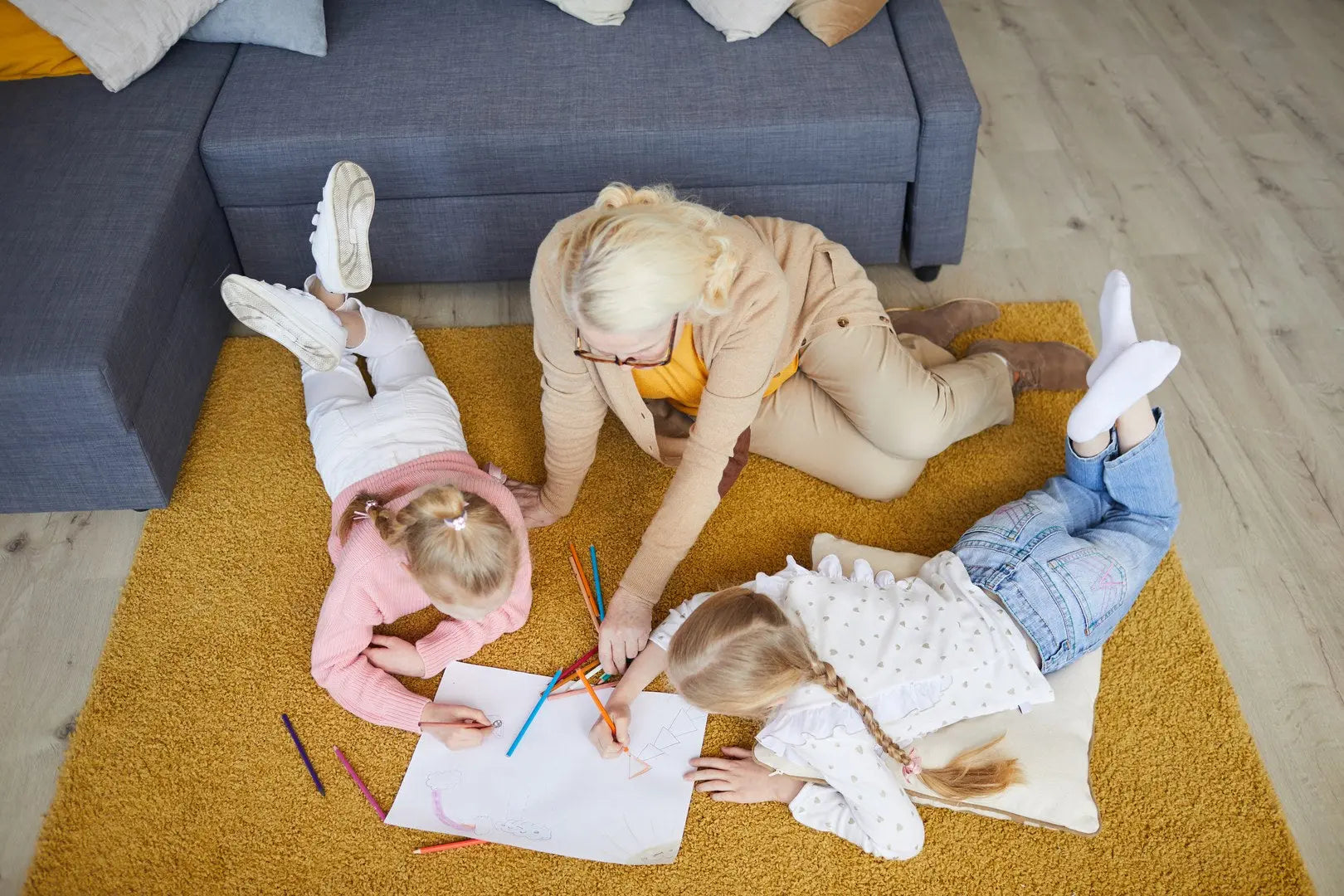
Starting kindergarten can bring a funny mix of excitement, nerves, new shoes, missing lunchboxes, and plenty of questions. Even children who are eager to begin may feel unsure about a new teacher, a different classroom, or a routine they have not followed before.
You do not need to recreate the school day at home to help them get ready. A few familiar routines, honest conversations, and short learning moments can make starting school feel more manageable for the whole family.
In short
Keep your start-of-kindergarten preparations simple. Talk about what your child can expect, gradually return to a comfortable sleep schedule, practise a few everyday tasks, and revisit familiar learning areas without turning home into a classroom.
Talk about what to expect before the first day
Children often have very practical questions about school. Who will take me? Where will my bag go? What happens at lunchtime? When will you come back?
Give them space to ask, and answer as simply as you can. If you know the basic shape of their day, talk through it together. You might explain that they will arrive, greet their teacher, spend time with their class, eat lunch, and come home afterward.
If possible, look at a photo of the school or pass by the entrance together. A little familiarity may make the first day feel less unknown.
Try not to make every conversation about being “ready.” This is a big change, and children may simply need to hear that it is normal to feel excited, nervous, or both.
Practise the small things they will do each day
Kindergarten involves plenty of everyday tasks alongside classroom learning. In the weeks before school starts, let your child practise some of the things they may need to manage more independently.
- Opening and closing their lunch container
- Putting on their shoes and jacket
- Packing a few belongings into their bag
- Washing and drying their hands
- Recognizing their written name
- Taking turns and asking an adult for help
There is no need to correct every mistake. The aim is simply to make these small parts of the school day feel more familiar.
Help the evening routine support the morning routine
School mornings tend to go more smoothly when the important decisions have already been made. Choose clothes, check the school bag, and place shoes where they can actually be found. It sounds simple, but those few minutes of preparation can save a surprising amount of morning drama.
Bedtimes often drift during the summer, especially when the days are longer and family schedules are more relaxed. Rather than making one sudden change, begin moving the evening routine back gradually.
Follow the same general sequence each evening: finish dinner, tidy up, wash, choose a quiet learning moment or story, and get ready for sleep. It does not have to happen at exactly the same minute every day. What matters is that the rhythm begins to feel familiar again.
Sleep needs differ from one child to another and change with age. Families can review the American Academy of Sleep Medicine’s guidance on children’s sleep and work backward from the time they need to wake up.
Revisit reading and math without adding pressure
Learning before the first day does not need to look like worksheets spread across the kitchen table. A short, shared review of familiar ideas is enough.
You could notice the first sound in a word, look for a letter in your child’s name, count objects around the house, or talk about what might happen next in a story. If they lose interest, leave it there and return to it another day.
Some parents worry that kindergarten has become “the new first grade,” with greater academic expectations placed on young children. Home can remain a place for relaxed conversations, shared stories, and everyday discoveries.
Reading readiness develops through many small experiences with sounds, letters, words, stories, and conversation. It is not a race to see who can read first.
Ozmotic Learning can become part of this evening rhythm through short, projection-based lessons covering phonics, reading readiness, mathematics, science, languages, and other early learning areas. A parent chooses what to explore, joins their child, and uses the projected content to start a conversation.
Keep the learning moment simple
When school is approaching, it is tempting to review everything at once. Letters, counting, colors, shapes, writing, and school rules can quickly turn into a long checklist.
Instead, choose one focus for the evening. You might revisit letter sounds on Monday, count familiar objects on Tuesday, and explore a science question later in the week. On another evening, let your child choose.
Some days they may want something new. On others, they may ask for the same lesson again. Familiar content gives children another opportunity to notice details, remember ideas, and talk about what they see.
If a little structure helps, try this flexible 20-minute routine:
- Choose together: Spend two or three minutes selecting one subject or lesson.
- Explore: Watch and respond to the projected lesson for around ten to twelve minutes.
- Talk about it: Revisit a favorite part or connect the lesson to something your child already knows.
The conversation does not need to sound like a quiz. “Which part did you like?” or “Have you seen that before?” is often enough. Twenty minutes is a useful guide rather than a rule, and some evenings will naturally be shorter.
What if you are unsure about kindergarten?
Families researching kindergarten may come across the term redshirting, which generally refers to delaying a child’s kindergarten start. It is a personal decision that may depend on local enrollment rules and the individual needs of the child.
If you have concerns about when your child should begin, speak to the school and a qualified healthcare professional who understands your family’s circumstances. Ozmotic Learning cannot assess whether a child is ready to begin kindergarten.
Give the first weeks time to settle
A child who seems cheerful at school may come home needing extra quiet, closeness, or an earlier evening. Another may want to tell you every detail before they have even taken off their backpack.
Keep after-school plans manageable where possible, and take your cues from how your child is doing. A projected lesson may fit naturally on one evening, while another calls for a familiar story and an earlier bedtime.
You are not trying to create a perfect routine in the first week. You are helping your family find its new rhythm.
A warm welcome to the new school year
There may still be rushed mornings, forgotten water bottles, and tired afternoons. That is all part of finding your feet. With a little preparation and time together at home, the new routine can begin to feel familiar.
Explore the Ozmotic Learning projection-based learning experience and discover short lessons covering letters, numbers, science, languages, reading readiness, and more.
Share:
Shapes for Preschoolers: Simple Ways to Explore Shapes and Spatial Words
How to Restart a Learning-at-Home Routine After the School Break