
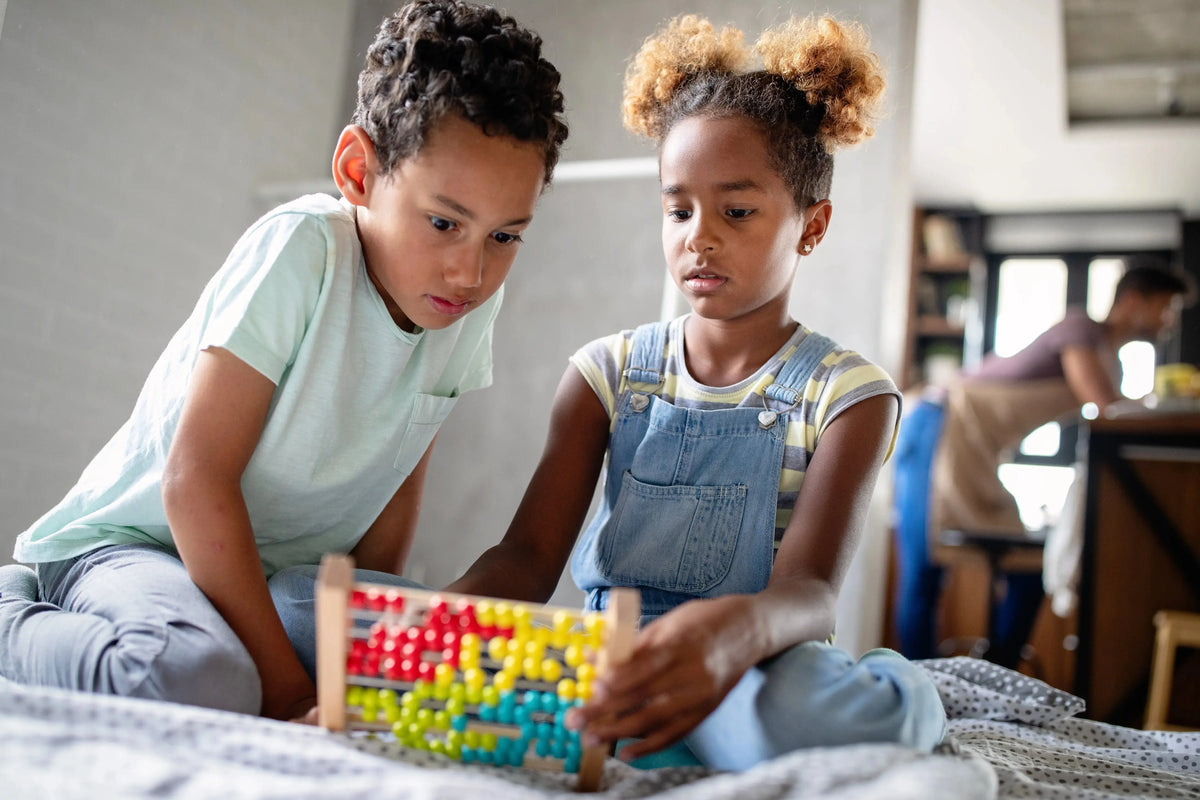
“Why did the ice disappear?” “Where does the rain go?” “Why is that shadow so long?” Young children often bring science into the day without realizing it. Their questions begin with something they have noticed, and that small observation can open a lovely family conversation.
You do not need a prepared experiment or a perfect explanation. A few thoughtful science questions for preschoolers can help your child look closely, share an idea, make a prediction, and wonder what they could try next.
In this article we'll show:
- How everyday questions can encourage scientific thinking
- Simple prompts for observing, comparing, and predicting
- Ways to respond when you do not know the answer
- How to keep science conversations relaxed
What makes a useful science question?
A useful science question invites a child to look, think, and explain. It is usually open enough for more than a one-word answer. Instead of asking, “Is this leaf green?” you might ask, “What do you notice about this leaf?”
Simple phrases such as “What changed?” or “Why do you think that happened?” can turn an ordinary moment into a gentle exploration.
Start with “What do you notice?”
Observation is a comfortable place to begin because there is no pressure to know an answer. Invite your child to describe what they can see, hear, smell, or feel.
You might ask what they notice about a puddle after rain, a piece of fruit cut open, or a bird moving through the yard. Give them time to look before adding another question.
Ask your child to look a little closer
If the first answer is brief, follow their attention rather than changing the subject. Try, “What else can you see?” or “Is there a tiny detail we missed?”
A closer look may reveal lines on a leaf, bubbles in water, or different colors in a stone. There is no need to name every feature. Noticing it together is enough.
Simple science questions for kids who like to compare
Comparing two familiar things can make a conversation easier. These questions for kids encourage close observation without expecting a single perfect answer. Place two leaves, spoons, blocks, or pieces of fruit beside one another and ask:
- What is the same?
- What is different?
- Which one feels heavier?
- Which one do you think will change first?
Your child may notice a detail that you did not expect. Ask how they reached their idea and listen to the explanation.
Invite a prediction
A prediction is a thoughtful guess about what may happen. Before placing an ice cube in a sunny spot, rolling a ball down a gentle slope, or adding water to dry soil, ask, “What do you think will happen?”
Let the prediction stand before trying it. The value is in forming an idea and checking it, even when the result turns out differently.
Change one thing at a time
When your child wants to test an idea, keep the setup small. If two balls roll down the same slope, change the ball rather than changing the ball and the slope together.
This makes it easier to discuss what may have affected the result. You can ask, “What did we keep the same?” and “What did we change?”
Talk about what happened
After trying an idea, return to the original prediction. Ask what happened, what surprised your child, and what they noticed along the way.
A result does not need to match the prediction. A different outcome simply gives you something new to discuss.
Explore questions during water moments
Water creates many natural opportunities for observation. During an ordinary family routine, you might compare what floats and sinks, notice which material absorbs a small drop, or watch water move between containers.
Try asking, “What do you think will stay on top?” “Where did the water go?” or “What changed when we added more?” Use only safe, familiar materials and remain nearby.
Notice light and shadows
Look at a shadow at two different times of day. Ask whether it looks longer, shorter, darker, or lighter. Your child can also notice what happens when an object moves closer to or farther from a light source.
Keep the conversation grounded in what is visible. A simple question such as “What changed when we moved it?” is often more inviting than a long explanation.
Watch the weather together
Look outside and ask what clues your child can find about the weather. They may notice moving branches, dark clouds, bright light, or drops on a window.
Follow with a prediction: “What do you think the sky might look like later?” When you check again, talk about what stayed the same and what changed.
Ask questions outdoors
A short walk can bring plenty to wonder about. Why are some leaves dry and others soft? Which path has more shade? Where do insects seem to gather?
There is no need to cover every question. Choose one observation that interests your child and stay with it for a moment.
Record a small discovery
Your child can draw what they noticed before and after a change. A simple line, shape, or color mark can help them remember the difference.
You can write down their words beside the drawing. Later, ask them to tell you what happened using the picture as a reminder.
What if you do not know the answer?
You are not expected to know everything. Saying, “I’m not sure. What do you think?” shows that wondering is welcome and that families can investigate a question together.
NAEYC encourages families to value children’s questions, allow time for exploration, and ask what they think may happen. Its guidance also suggests using drawing or writing to record observations.
What if your child’s prediction is different?
A surprising prediction can lead to a useful conversation. Ask what made your child choose that answer, then explore the idea together when it is safe to do so.
Avoid rushing to supply the correct explanation. Watching, testing, and talking about the result gives your child room to reconsider the idea in their own words.
Keep the questions conversational
Several questions in a row can begin to feel like a quiz. Ask one, pause, and respond to what your child says. Their answer may lead somewhere more interesting than the question you had planned next.
It is also fine to leave a question open. Wondering together can be the whole learning moment.
How this differs from a general STEM session
This approach focuses on the language adults can use before, during, and after an exploration. If you would like broader subject ideas, see these simple ways to explore STEM learning at home.
For more ideas that follow a child’s interests across the day, you can also read about keeping young children curious at home.
How Ozmotic Learning can begin a science conversation
Ozmotic Learning includes projected lessons across science and other early learning subjects. Families can explore the available learning content and use an image, idea, or lesson moment as the beginning of a conversation.
You might ask, “What do you notice?” “What do you think will happen next?” or “What would you like to know more about?” Keep the exchange brief and follow your child’s curiosity.
Frequently asked questions
What are some simple science questions for preschoolers?
Begin with “What do you notice?” “What is the same or different?” “What do you think will happen?” and “What changed?” These prompts work with many familiar moments at home or outdoors.
Should I explain the science straight away?
Not always. Give your child time to observe and share an idea first. You can offer a short explanation afterward or look for an answer together.
What if my child loses interest?
Let the conversation end. A brief moment of close observation can be worthwhile, and you can return to another question when something naturally catches their attention.
Do we need special materials?
No. Water, light, weather, leaves, safe household objects, and everyday changes can all inspire useful questions. Choose materials that are familiar and suitable for close supervision.
Begin with one small question
The next time your child stops to examine something, pause with them. Ask what they notice and listen before adding another thought. One warm question can be enough to begin observing, predicting, and wondering together.
Share:
Sorting Games for Preschoolers: Color, Shape and Size
Spanish Words for Kids: A Calm First Vocabulary Routine at Home