
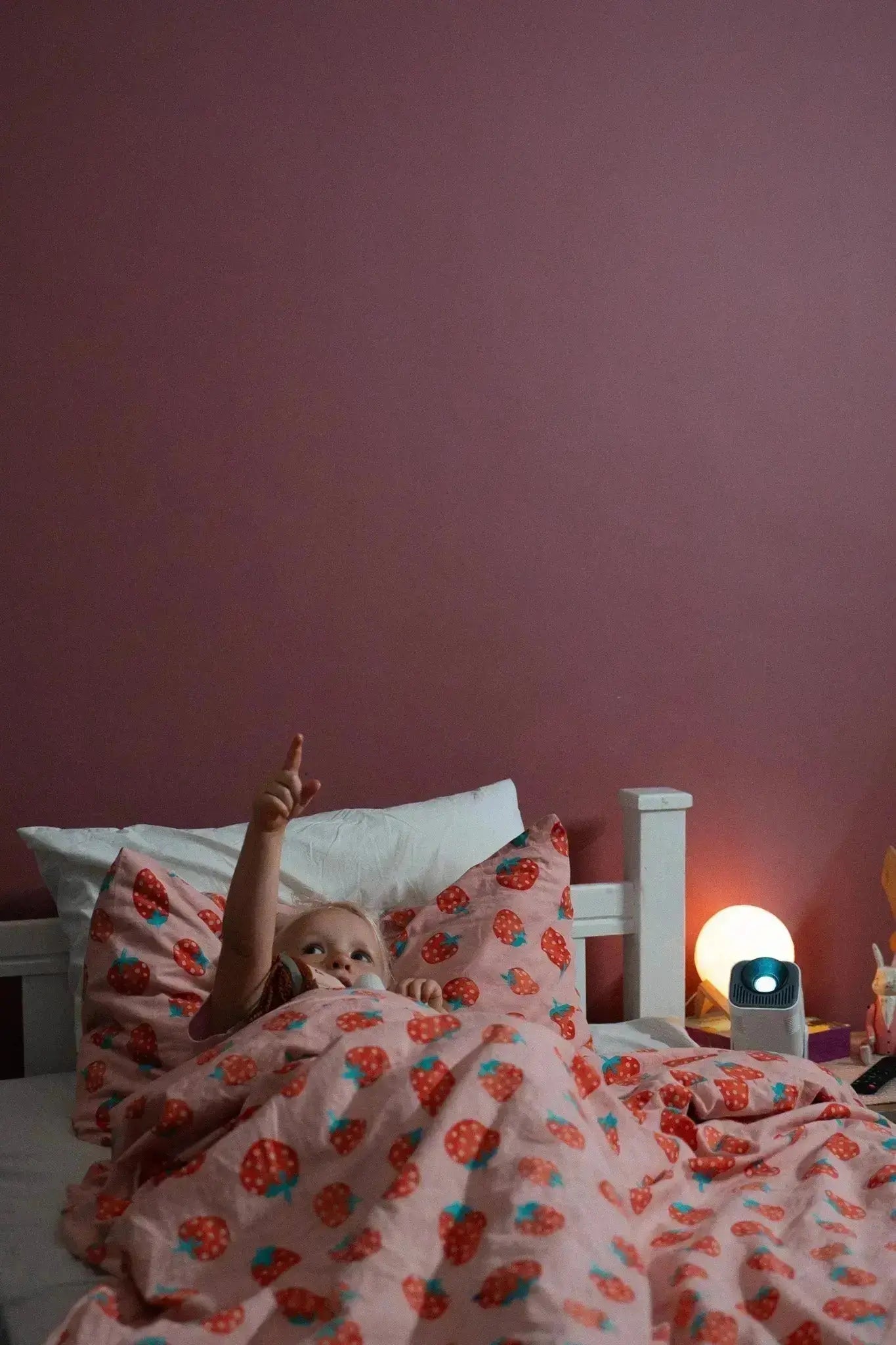
Personalized learning at home means adjusting parts of the learning experience to better match what a child is currently working on. That might mean changing the difficulty, choosing a more familiar example, slowing the pace, repeating an idea, or offering a small amount of choice.
Quick answer: Personalized learning does not require a completely different curriculum for every child. At home, it can be as simple as noticing what feels too easy, too difficult, or unfamiliar and adjusting the next learning moment accordingly.

What is personalized learning?
Personalized learning is a broad approach in which parts of teaching or learning are adapted to the learner rather than expecting every person to move through exactly the same material in exactly the same way.
At home, that does not need to involve complex lesson plans or a formal learning model.
A parent might notice that a child:
- already knows a particular letter sound and is ready to move on
- needs more time with a number concept
- responds better to a familiar example
- would benefit from revisiting something from earlier in the week
- is ready for a little more independence
The adjustment is the personalized part.
What research says about personalized learning
The paper On the Promise of Personalized Learning for Educational Equity examines personalized learning through the lens of educational equity.
The authors discuss the potential of personalization while also emphasizing that the evidence is mixed and that implementation matters. Personalized approaches are not automatically more effective simply because they are individualized.
That is an important distinction for families. The goal is not to assume that personalization guarantees academic success. It is to use information about the learner thoughtfully when deciding what to revisit, what support to provide, and what should come next.
What can parents personalize at home?
A useful way to think about personalized learning at home is to separate the parts of the learning experience that can change.
| What can change? | What that might look like |
|---|---|
| Pace | Spend more time on something unfamiliar or move on when an idea is already comfortable. |
| Difficulty | Use a simpler example first, then add a small challenge. |
| Topic | Use an example connected with something the child already recognizes. |
| Amount of support | Work through the first example together, then let the child try another. |
| Repetition | Return to a useful concept across several learning moments. |
| Choice | Offer two suitable subjects or examples and let the child choose between them. |
This creates a more flexible learning approach without removing all structure.
Personalized learning does not mean removing structure
A personalized learning environment can still have familiar routines, clear expectations, and parent guidance.
In fact, younger learners may find it easier when the basic structure stays predictable even while the content changes.
For example, a family might keep the same quiet learning time each day while adapting the subject:
- letters one day
- numbers another day
- a science question later in the week
- a familiar story when the child needs something easier to revisit
The learning environment stays recognizable while the specific content responds to current needs.

How do you know when learning is too easy or too difficult?
Parents do not need a formal test before making every small adjustment.
Simple observation can provide useful information.
You might notice:
- a concept is completed quickly and comfortably
- the same mistake keeps appearing
- a child needs repeated prompts to continue
- an example makes sense once it is explained differently
- a familiar idea is ready to be used in a new context
This kind of informal assessment is different from standardized tests. It is simply information gathered during the learning moment that can help guide what happens next.
Formal assessment has a different role and may be useful when teachers or other professionals need a clearer picture of a child's progress or learning needs.
What about learning styles?
The phrase learning styles is often used to suggest that a child learns best through one fixed category, such as visual, auditory, or hands-on learning.
Personalized learning does not require putting a child into one permanent category.
Different ideas may be easier to explore in different ways. A child might hear a new word, see an example, talk about it with a parent, and encounter it again later in another context.
Rather than asking, “What is my child’s learning style?” it can be more useful to ask:
- What are they trying to understand?
- What do they already know?
- Which example is making sense?
- Would another explanation help?
- Do they need more support or more independence?
Those questions are more useful for adapting the actual learning experience.
Personalized learning and interest-based learning are not the same thing
A child's interests can be part of personalization, but they are only one part.
Interest-based learning begins with something the child is already curious about and uses that interest as a doorway into learning.
Personalized learning is broader. It can also involve adjusting pace, difficulty, repetition, examples, or support even when the subject itself stays the same.
For more on using curiosity as the starting point, see our interest-based learning for kids guide.
How personalized learning environments can stay simple
Personalized learning environments do not have to be complicated spaces filled with special materials.
At home, the environment might simply provide:
- a familiar place for learning
- a manageable amount of content
- parent guidance when needed
- room for conversation
- the ability to revisit useful ideas
- a clear ending to the learning moment
The aim is to make it easier to adjust learning without having to rebuild the whole routine every day.
Simple personalized learning examples
Early reading
A child knows several letter sounds but still finds blending difficult.
Instead of introducing more letters, the parent spends more time combining familiar sounds into simple words.
If reading difficulties persist, our early reading intervention guide explains when more focused support may be useful.
Mathematics
A child can count objects comfortably but is still working on recognizing written numerals.
The next learning moment can focus less on counting and more on connecting the written number with the amount it represents.
Language
A child recognizes a new word but rarely uses it during conversation.
The family can revisit the word during a story, conversation, or another familiar routine rather than simply introducing more vocabulary.
Life skills
Personalization can also appear in ordinary life skills. One child may be ready to take more responsibility for choosing clothes or preparing part of the bedtime routine, while another still benefits from more parent guidance.
The principle is the same: adjust the level of support rather than assuming every learner needs the same next step.
How repetition can be personalized
Some ideas need more repetition than others.
A child may remember one concept after a few encounters while another remains unfamiliar for longer.
Personalized learning at home allows families to revisit useful material without assuming everything needs the same number of repetitions.
Our guide to learning repetition for kids explains more about revisiting ideas across multiple learning moments.

What about personalized learning in special education?
Special education may involve individualized goals, formal plans, specialist support, and accommodations that are very different from ordinary personalization at home.
Parents should not treat informal home learning as a substitute for professional educational support when a child has identified learning needs.
Instead, learning at home can complement the guidance already being provided by teachers, specialists, or other qualified professionals.
Do technology tools make learning personalized?
Technology tools can make it easier to choose different content or repeat a lesson, but a tool is not automatically personalized simply because it offers many options.
The important question is how the parent or educator uses those options.
A useful tool should make it possible to choose content intentionally, revisit it where needed, and adjust the learning experience without replacing adult guidance.
Where Ozmotic Learning fits
Ozmotic Learning gives families access to projection-based lessons across a range of early learning subjects.
A parent can select a lesson based on what the child is currently exploring, revisit familiar material, or move toward another subject when appropriate.
The Ozmotic Learning projection-based learning tool supports guided learning moments through wall or ceiling projection.
The Ozmotic Learning content library includes subjects such as foundational learning, reading and phonics, mathematics, languages, science, stories, and other early learning content.
The parent remains part of the learning experience by choosing what fits the family's routine and deciding when it makes sense to repeat, adapt, or move on.
What personalized learning cannot promise
Personalized learning may make it easier to adapt support, but it does not guarantee academic success, eliminate learning difficulties, or ensure that every child will progress at a particular rate.
The research itself is more nuanced than that.
Personalization is one learning model among many, and its usefulness depends on how well the approach matches the learner, the goal, the support available, and the wider learning environment.
That is why families should treat personalization as a way to make thoughtful adjustments, not as a promise of a particular outcome.
Final thoughts
Personalized learning at home can be simple.
Notice what your child already understands. Identify what still feels unfamiliar. Adjust the pace, difficulty, support, or example, and give the idea another opportunity to make sense.
You do not need a completely different lesson plan for every child or every day. Often, personalization is simply choosing the next useful step based on what you can see right now.
That creates a flexible learning environment where family routines can stay familiar while the learning itself adapts as needed.
Share:
Regular Sleep Schedule for Toddlers: Bedtime, Wake Time and Naps
Early Reading Intervention: A Parent Guide to Reading Support