
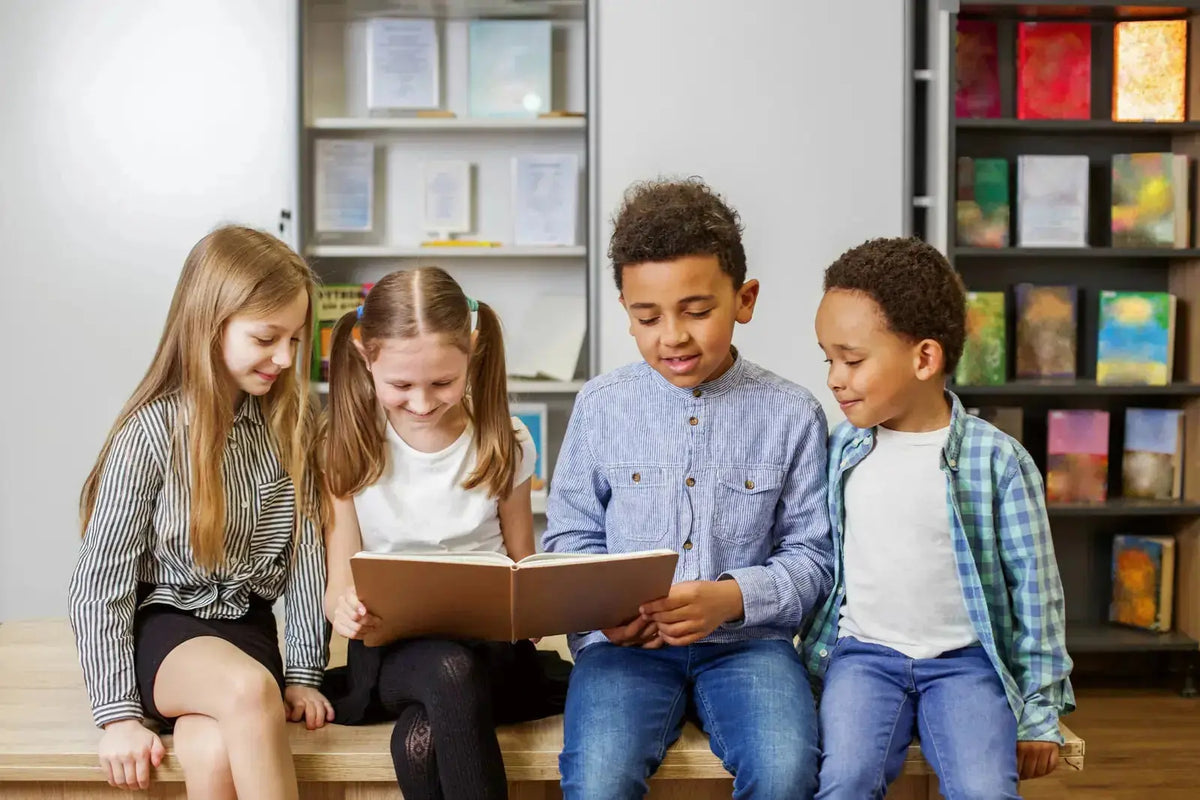
Have you ever asked your child what happened in a story, only to hear the ending first and the beginning somewhere in the middle? That is completely normal. Learning to place events in order takes practice, and a familiar book gives you an easy place to begin.
Story sequencing for kids does not need to become a formal lesson. A picture book, a family routine, or a conversation about the day can help children explore what happened first, what came next, and how everything ended.
In this article
- What story sequencing means
- How it connects with comprehension and retelling
- Simple ways to explore first, next, and last
- What to do when events become mixed up
What is story sequencing?
Story sequencing means placing events in the order in which they happened. For young children, this often begins with three clear parts: the beginning, middle, and end.
Families can introduce sequencing words such as first, next, then, and last. These words give children a helpful structure when they explain a story or share something that happened during the day.
Why does story sequencing matter?
Remembering the order of events can help children make sense of what they hear and see. It also offers a simple framework they can use to retell the story in their own words.
Reading Rockets explains that recalling and retelling events in sequence helps children identify important narrative parts, understand text structure, and summarize. At home, the goal is not a perfect retelling. It is noticing how events connect.
Begin with first, next, and last
Start with three events rather than expecting every detail. After reading a short book, ask what happened first, what happened next, and what happened last.
If your child is unsure, look back at the pictures together. A gentle clue is often more useful than repeating the question.
Use a familiar story
A well-known book is a comfortable starting point because your child already knows the characters and main events. Choose one moment from the beginning, one from the middle, and one from the ending.
Look at the illustrations and discuss the sequence together. Ask your child to describe each picture before arranging the moments in the correct order.
Pause and predict what comes next
Before turning a page, ask, “What do you think might happen next?” There does not need to be one perfect answer. The question encourages your child to think about how one event could lead to another.
After turning the page, compare the new event with your child’s idea. Keep it conversational rather than treating the prediction like a test.
Retell the story using pictures
Choose three or four illustrations and use them as visual reminders. Invite your child to point to the picture that comes first, followed by the next event and the ending.
If the pictures become mixed up, return to the book and look for clues. Changes in the characters, setting, or scene may help reveal the order.
Connect sequencing with everyday routines
Sequencing also appears in ordinary routines. Talk through the steps involved in brushing teeth, getting dressed, preparing a snack, or leaving the house.
You could say, “First we found your shoes, next we put them on, and last we tied the laces.” Familiar routines make sequence language easier to understand.
Model a short retelling
If your child does not know where to begin, offer a brief example:
First, the dog could not find his ball. Next, he looked around the garden. Last, he found it beneath the chair.
Then invite your child to add one detail or tell the same story in their own words.
What if the events are out of order?
Mixing up events is part of learning. Instead of correcting the answer immediately, ask, “Did that happen before or after they went outside?”
You can reopen the book, review its pictures, or retell the story together. Story sequencing should feel like a shared conversation, not a memory test.
Move from three events to a longer sequence
Once first, next, and last feel familiar, introduce four steps using first, next, then, and last. This language is related to ordinal numbers, which describe position or order.
Sequencing can reach beyond stories too. During a simple scientific inquiry, children can describe what they noticed first, what changed next, and what happened last.
How Ozmotic Learning can fit into story conversations
Ozmotic Learning offers projection-based lessons across phonics, reading readiness, mathematics, science, languages, and other early learning areas. Families can explore the learning content and use projected images or lesson moments to begin a simple conversation.
Ask what appeared first, what changed next, or what your child remembers from the end. Follow their interest and let the exchange stay brief.
Frequently asked questions
How do you explain story sequencing to a child?
Explain that sequencing means placing events in the order they happened. Begin with first, next, and last using a familiar story or daily routine.
How many events should a child sequence?
Three clear events are a helpful starting point. Add more when your child is comfortable describing a beginning, middle, and end.
Can sequencing support comprehension?
Sequencing can help children notice connections, identify important events, and organize a retelling. It is one useful part of broader reading comprehension.
What if my child cannot remember the story?
Use pictures as prompts, offer two possible choices, or model a short answer. The aim is to explore the order together rather than test memory.
Start with one familiar story
Choose a book your child already enjoys and talk about three moments. That small conversation is enough to begin exploring the beginning, middle, and end together.
For more early-reading guidance, explore simple early-reading support at home and phonics games for preschoolers.
Share:
Syllable Games for Preschoolers: Simple Ways to Clap and Count Word Parts
Sorting Games for Preschoolers: Color, Shape and Size