
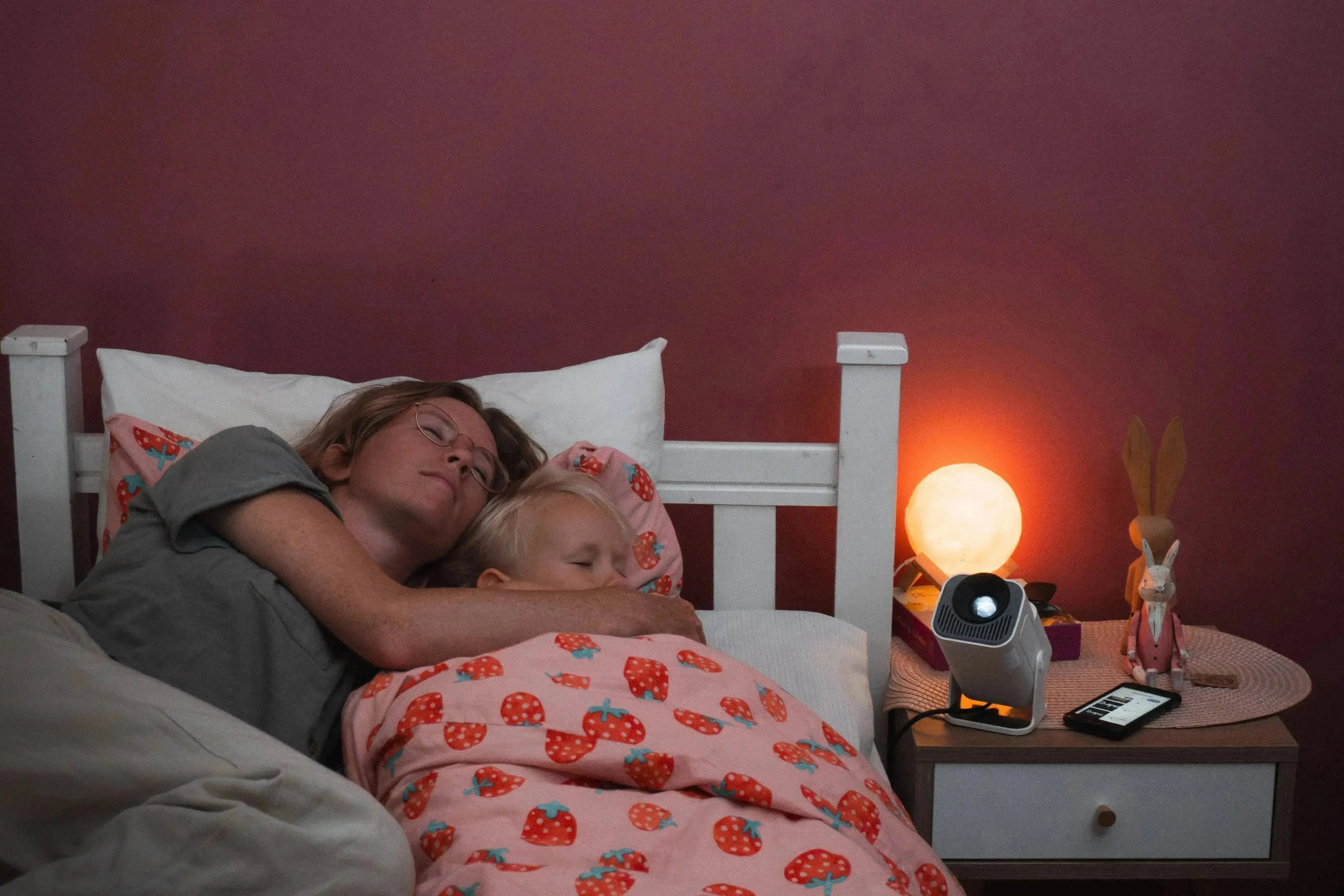
As parents, we have all been there: rushing through dinner, baths, and stories, then facing the bedtime battle. The good news is that sleep learning for kids does not need to be complicated. Research suggests that calm learning before sleep may support memory when it is short, gentle, and part of a predictable routine.
Sleep learning for kids
- Keep bedtime calm and predictable.
- Use one short, gentle lesson before lights out.
- Repeat the same topic for a few nights.
- Add a subtle cue, like a familiar sound or visual.
- Let sleep support the learning process naturally.
Key takeaway: When routines are calm and consistent, sleep learning for kids can help children revisit what they explored right before bed.

The science of sleep and memory: what the study found
A University of Utah Health newsroom article shared findings on how sensory cues during sleep can support memory consolidation. In the study, participants learned simple piano melodies, then napped while researchers played subtle sounds linked to what they practiced. Brain activity showed patterns consistent with replaying learning, and performance improved afterward. This is part of a broader concept often called targeted memory reactivation, where cues linked to earlier learning may help strengthen retention during sleep.
You can read the summary here: University of Utah Health, memory during sleep research overview.
For families, the useful idea is simple: sleep learning for kids works best when learning happens gently before bed, then sleep gives the brain time to process and organize what was introduced.
Why bedtime can be a useful learning window for kids
Children’s brains develop quickly during the early learning years, when language, number sense, and foundational concepts are forming. Bedtime can be a natural transition point where distractions drop away and the brain shifts toward rest. That quiet pre-sleep window can make sleep learning for kids easier to repeat because there is less noise competing for attention.
This is not about cramming or keeping kids awake longer. It is about choosing low-stimulation input that supports calm, then letting repetition and sleep play their natural role.

Practical tips for a calm bedtime learning routine
To make sleep learning for kids feel natural in your home, focus on consistency over perfection. These steps are designed to be realistic for busy parents.
- Create a wind-down sequence: pick a repeatable order, such as snack, brush teeth, pajamas, short lesson, and lights out.
- Choose age-appropriate content: toddlers and early learners may enjoy letters, numbers, and colors, while older children may enjoy phonics or simple science facts.
- Use repetition on purpose: repeat the same topic for a few nights so it becomes familiar and easy to follow.
- Keep sensory cues subtle: soft visuals and gentle audio can support calm instead of excitement.
- End the same way each night: a timer, a phrase, or a short prayer can signal that sleep is next.
When you keep the experience calm and repeatable, sleep learning for kids becomes part of the routine, not another battle.
How Ozmotic Learning supports calm bedtime learning
That is the idea behind Ozmotic Learning. Instead of adding more activity at bedtime, it supports gentle learning during the final minutes of the day. The soothing wall or ceiling projection and age-appropriate lessons, covering letters, numbers, science facts, calming stories, and more, can help families create a predictable bedtime learning rhythm.
If you want to see the projection-based learning tool parents use for this routine, visit the Ozmotic Learning projection-based learning tool. To understand the learning principles behind repetition and routine, explore Learn the Science. For examples of lessons families use at night, browse the Content library.
What to do when bedtime does not go perfectly
Not every night will be smooth. Kids get wiggly, routines change with travel, and siblings can bring extra energy. If your child stays too engaged, shorten the session and switch to a quieter close, like a brief breathing exercise or a familiar story. If you are managing multiple kids, shared content can reduce friction, and it can still support sleep learning for kids through consistent exposure.
| Challenge | What it can look like | Simple fix |
|---|---|---|
| Child is too energized | Asking for “one more” and staying awake | Shorten to 5 to 10 minutes, then lights out |
| Inconsistent routine | Different bedtime every night | Anchor one consistent step, like the same lesson time |
| Siblings want different topics | Competing requests | Rotate topics by day, and repeat each for a few nights |
| Parent wants less evening screen use | Concern about stimulation close to bed | Choose low-stimulation bedtime activities and keep the room dim |
Wrapping up: start with one calm bedtime habit
Bedtime does not have to become a learning session. It can simply include one calm, repeatable moment that helps children revisit a small idea before sleep. By leaning into what research suggests about sleep and memory, families can create calmer evenings and support gentle review without adding pressure.
Start small, stay consistent, and let sleep learning for kids become a gentle habit that fits your child’s bedtime routine.
If you want help tailoring a routine for your family, reach out through the Contact page.

Share:
Educational Bedtime Routine for Toddlers: Calm Learning That Fits Your Family Rhythm
Bedtime learning for kids: Tips backed by mind research data