
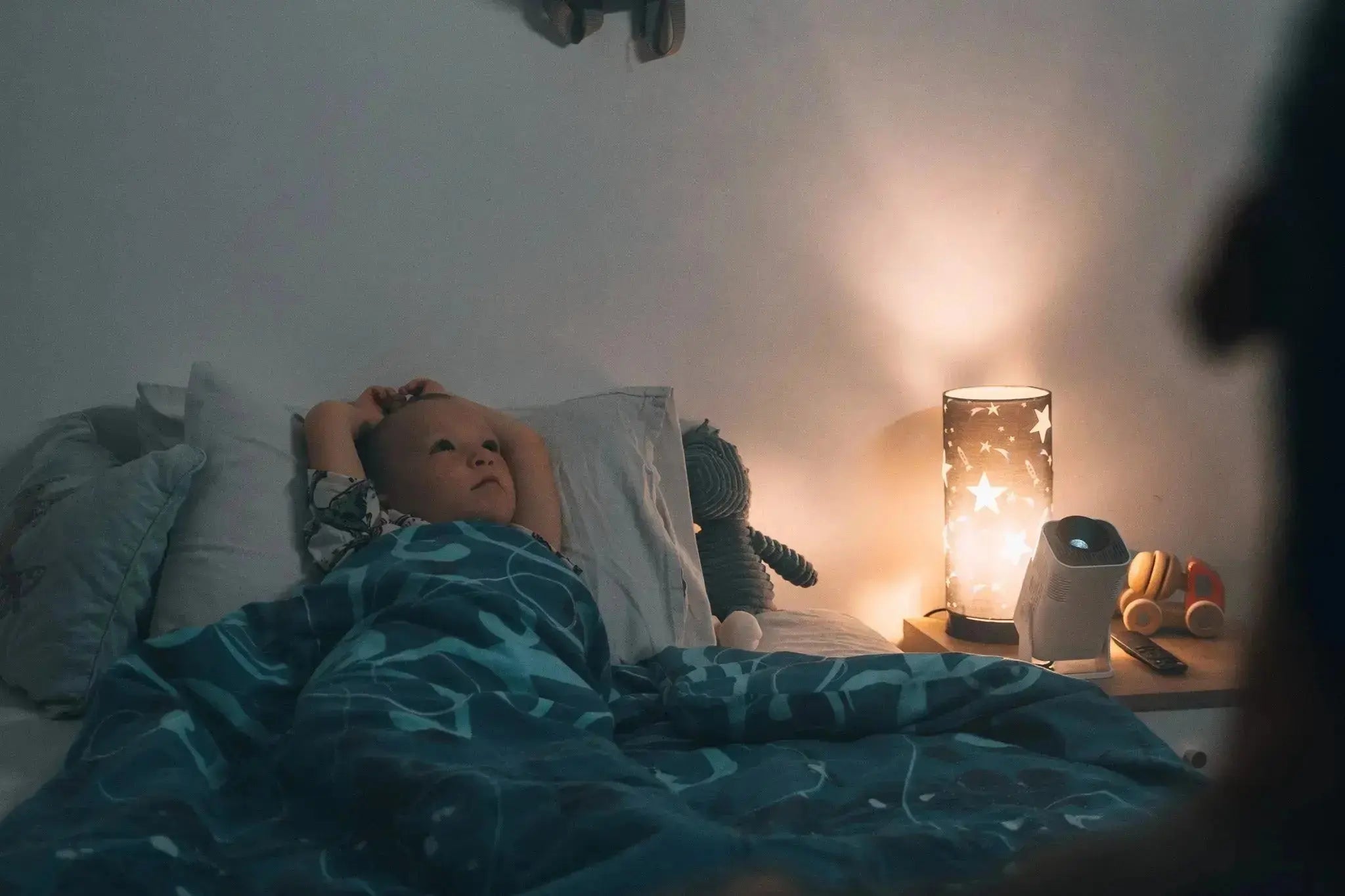
Sleep and child development are closely connected, but the relationship is broader than simply saying that more sleep leads to better outcomes. Researchers study how sleep duration, sleep quality, and sleep patterns are associated with attention, memory, emotional well-being, behavior, and physical health across childhood.
Quick answer: Sleep is one part of the wider environment that supports healthy development. Research in school-age children has found associations between sleep patterns and cognitive, emotional, and behavioral outcomes, although much of the evidence is observational and does not prove direct cause and effect.
How are sleep and child development connected?
Sleep gives the body and brain a regular period of rest, but researchers are also interested in how sleep relates to learning, attention, memory, emotional well-being, and everyday functioning.
That does not mean one bedtime routine or one extra hour of sleep guarantees a particular developmental result. Child development is shaped by many factors, including health, environment, relationships, learning opportunities, individual differences, and family routines.
Sleep is one part of that larger picture.

What recent research says about sleep and child development
A systematic review published in 2025 examined research on sleep and developmental outcomes in school-age children. It included 20 studies published between 2019 and 2024 and looked at associations between sleep duration, sleep quality, sleep patterns, cognition, emotional well-being, and behavior.
The review found consistent associations between better sleep measures and more favorable cognitive, emotional, and behavioral outcomes. However, the authors also stressed an important limitation: many of the included studies were cross-sectional and relied on self-reported measures, which limits what can be said about causation.
You can read the review here: Sleep as a Developmental Process.
That distinction matters. The evidence supports a relationship between sleep and child development, but it does not mean that changing one sleep habit will automatically change learning, mood, or behavior.
Why sleep duration is only part of the picture
Parents often focus first on how long a child sleeps. Sleep duration matters, but researchers also look at consistency, timing, sleep quality, and the broader evening routine.
A child may have different sleep needs depending on age, health, schedule, and individual circumstances. That is why broad recommendations are more useful as guidance than as a promise that every child should follow exactly the same timetable.
HealthyChildren.org, from the American Academy of Pediatrics, provides practical guidance on healthy sleep habits and age-related sleep needs. You can read its guidance on healthy sleep habits.
What does sleep quality mean?
Sleep quality is a broad term. It can include whether sleep is interrupted, how easily a child settles, how rested they appear during the day, and whether sleep feels consistent enough to support ordinary family life.
Parents do not need to measure sleep scientifically at home. Instead, it can be useful to notice patterns over time.
For example:
- Does bedtime happen in a broadly familiar way?
- Is wake time relatively consistent on ordinary days?
- Does the child regularly wake during the night?
- Does tiredness seem to interfere with everyday routines?
- Has anything changed recently in the family's schedule?
These observations can be useful when deciding whether a routine needs adjusting or whether professional advice would be appropriate.
Why consistency matters in family sleep routines
A consistent evening rhythm can make bedtime easier to understand because the main steps happen in a familiar order.
That might mean:
- Begin winding down at a recognizable point in the evening.
- Move through washing, pajamas, bathroom, and teeth.
- Share a quiet family moment.
- Read or revisit something familiar.
- Finish with the same recognizable goodnight sequence.
The goal is not rigid timing. A family routine can stay recognizable while still adapting to busy evenings, weekends, travel, or changes in the household.
For a fuller practical guide, see our bedtime routines for kids article.

How sleep relates to attention and memory
The systematic review found associations between sleep measures and aspects of cognitive functioning, including attention and memory.
Other research also looks more specifically at what happens to memories after learning. This process is often discussed in terms of memory consolidation.
That is a narrower topic than general child development, so families interested in the science can also read our guide to sleep and memory in children.
The important distinction is that sleep does not teach new information by itself. It is one part of what happens after children have already encountered and begun processing something new.
How sleep relates to emotional well-being and behavior
Research has also found associations between sleep and emotional or behavioral outcomes in children.
Again, association does not mean that a bedtime change will directly solve frustration, attention difficulties, or behavioral concerns.
Children's emotions and behavior can be influenced by many things, including temperament, relationships, health, school experiences, family circumstances, and developmental differences.
Sleep is one factor worth considering within that wider context, particularly when parents notice persistent tiredness or disrupted sleep patterns.
A practical evening routine for families
Families do not need an elaborate sleep plan to create a recognizable end to the day.
| Evening stage | What it might include |
|---|---|
| Transition | Move toward the bedroom and begin lowering the pace of the evening. |
| Get ready | Wash, pajamas, bathroom, and brushing teeth. |
| Connect | A short conversation, cuddle, prayer, or another familiar family moment. |
| Quiet time | Reading, storytelling, or another calm part of the routine. |
| Goodnight | The same simple closing sequence each evening. |
The exact timing can vary. What matters is choosing something the family can realistically repeat.

Where can a calm learning moment fit?
Some families include reading, conversation, or a short learning moment before the final goodnight sequence.
That does not need to become another formal lesson. The evening can remain primarily a family routine, with learning included only where it feels natural and manageable.
Ozmotic Learning uses wall or ceiling projection to provide short, guided learning moments across letters, numbers, stories, languages, science, and other early learning subjects.
The Ozmotic Learning projection-based learning tool can fit into a calm family routine where appropriate, while the Ozmotic Learning content library lets families explore different learning subjects.
For more about the research and thinking behind Ozmotic Learning, visit our Science page.
What parents can reasonably take from the research
The research does not support turning bedtime into another performance goal. A more useful takeaway is that sleep belongs within the wider picture of healthy development.
- Children's sleep needs change as they grow.
- Sleep duration is only one part of the picture.
- Consistency can make family routines easier to recognize.
- Sleep is associated with aspects of cognition, emotional well-being, and behavior.
- Most research does not prove that one sleep habit directly causes a developmental outcome.
- Persistent sleep concerns deserve individual guidance rather than generic advice.
When should families ask for professional guidance?
Occasional disrupted nights are part of family life. Persistent concerns are different.
Parents may want to speak with a pediatrician or other qualified healthcare professional if a child regularly experiences significant difficulty sleeping, persistent snoring, frequent night waking, unusual breathing during sleep, or substantial daytime sleepiness.
Professional guidance can help families understand whether something beyond the ordinary bedtime routine may be affecting sleep.
Final thoughts
Sleep and child development are connected, but the relationship is not a simple formula. Research suggests meaningful associations between sleep patterns and aspects of cognition, emotional well-being, and behavior, while also reminding us that child development is shaped by many interacting factors.
For families, the most practical place to begin is often straightforward: create an evening rhythm that is calm, recognizable, and realistic enough to repeat.
From there, protect rest, notice patterns, and seek individual guidance when sleep concerns persist.
Share:
Bedtime Resistance in Children: Calm, Consistent Routine Ideas
Interest-Based Learning for Kids: Build on Curiosity at Home